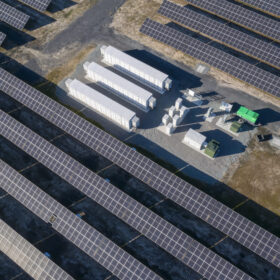
India approves viability gap funding scheme for battery storage development
India aims to develop 4 GWh of battery energy storage systems (BESS) by 2030-31 through its viability gap funding (VGF) scheme. The selection of BESS developers for VGF grants will undergo a transparent, competitive bidding process.
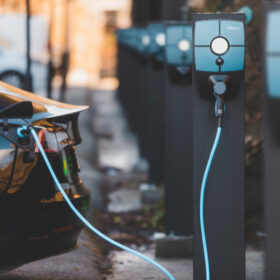
Bringing the benefits of affordable EV charging points to apartment blocks
One of the benefits of electric vehicle (EV) ownership is being able to plug your car into a wall at home ready for the following day’s commute but the idea is not so simple for apartment dwellers. Harald Seip, of EV charger company Elaway, suggests ways EU policymakers could solve that problem.

Gambia launches tender to deploy 1,100 solar systems on public buildings
Gambia’s Sustainable Energy Services Company is launching a tender to install 1,100 PV systems, ranging from 2 kW to 240 kW in size, on 1,000 schools and 99 health facilities.
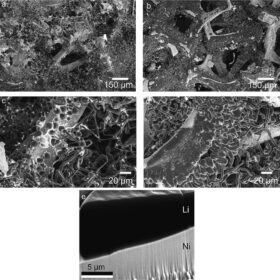
Anode-less redox flow batteries capable of fast cycling
Researchers in the US have demonstrated that replacing the planar lithium anode in a redox mediated lithium-sulfur redox flow battery with a high surface area scaffold enables 10 times faster cycling, up to 10 mA cm−2, without short circuit or voltage instability.
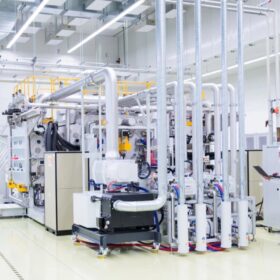
Ascent Solar hits 15.2% efficiency in production trials for CIGS cell
Ascent Solar has achieved a 15.2% efficiency for a copper indium gallium diselenide (CIGS) cell in production trials by replacing cadmium sulfide with a new material in the manufacturing process.
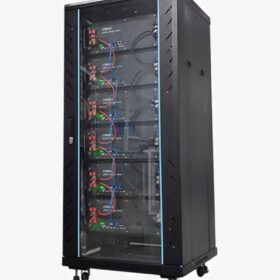
Coremax unveils 100Ah lithium iron phosphate for rooftop PV
The Chinese manufacturer said its new storage system is intended for use in residential and small commercial PV systems. It features a storage capacity of 30 kWh and a nominal voltage of 51.2 V.
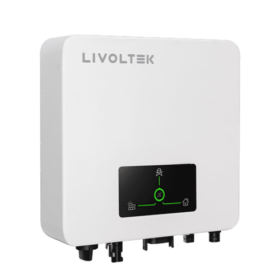
Livoltek to build 1.8 GW inverter factory in Brazil
Livoltek plans to build a 1.8 GW inverter factory in Manaus, northern Brazil. It says the facility will manufacture single-phase and three-phase devices.

Inverted perovskite solar cell based on methyl-substituted carbazole HTL achieves 20.1% efficiency
Indian scientists built an inverted perovskite PV device that uses a self-assembled monolayer to suppress nonradiative recombination at the interface between the perovskite absorber and the hole transport layer. The cell achieved remarkable efficiency and was also able to retain the initial efficiency rating for 3,00 h.
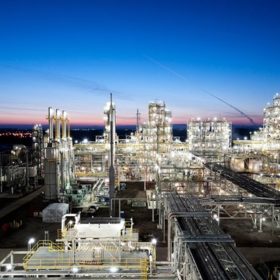
Qcells to sign $3 billion supply agreement for US-made polysilicon
Hanwha Qcells will make sizable prepayments to help restart the REC Silicon plant in Moses Lake, Washington, by Nov. 1, with a goal of reaching full capacity by the end of 2024.
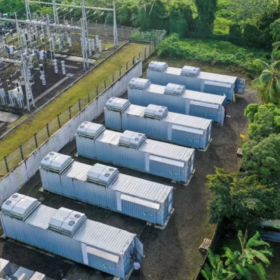
Akuo to deploy 200 MWh of battery storage in New Caledonia
Akuo plans to deploy 200 MWh of battery storage in New Caledonia, supplying 50 MW for three hours per day over 12 years. The facility will primarily support the operation of nickel mines.
