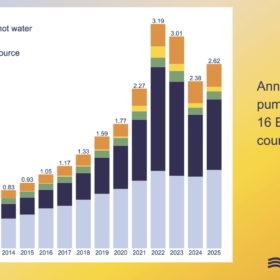
European residential heat pump sales increased in 2025
Analysis across 16 European countries finds an around 240,000 increase in the number of residential heat pump sales year-on-year. The European Heat Pump Association attributes the upward trend to governments stabilizing subsidy schemes.

Ghana plans to procure 200 MW of battery storage
Ghana’s Minister for Energy and Green Transition says the country will advertise competitive bidding processes to deploy 200 MW of battery storage across the country. Ghana’s current installed battery capacity stands at 10 MWh.
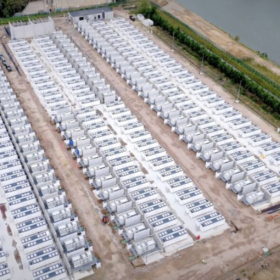
Brazil’s LRCAP battery auction demand estimated at nearly 3 GW
Brazil’s second Long-term Reserve Capacity Auction (LRCAP) of 2026 has contracted 501 MW of thermoelectric capacity, leaving an estimated 3 GW of remaining demand to be addressed in a forthcoming battery storage auction expected later this year.
German startup offers team of 22 specialized AI workers for PV plant O&M operations
Invertix has launched 22 specialized AI “workers” to automate O&M tasks for renewable energy assets, targeting inefficiencies in data handling, alarm management, and reporting. The startup says its system enables PV plant operators to scale portfolios more efficiently by reducing manual workloads, while keeping humans in the loop for critical decisions.

Türkiye’s solar capacity surpasses 25 GW
Alparslan Bayraktar, Türkiye’s Minister of Energy and Natural Resources, says 2026 will be a record year for renewables in the country after total deployed solar reached 25,827 MW by the end of January.
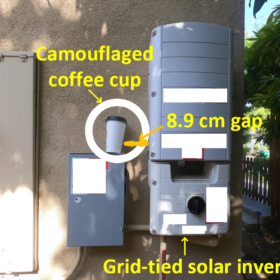
When tiny magnets attack PV systems
In an interview with pv magazine, cybersecurity expert Mohammad Al Faruque explains how seemingly simple sensors in PV systems and other energy systems are surprisingly vulnerable to magnetic, electrical, and acoustic perturbations, which can remotely influence control systems without physical access. Protecting these sensors requires both strict physical security and the development of hardened, interference-resistant technology to safeguard critical infrastructure.
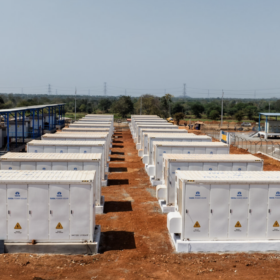
Indian industry body projects 346 GWh of BESS capacity by 2033
India’s cumulative installed battery energy storage system (BESS) capacity is projected to reach 346 GWh by 2033 from less than 1 GWh today, according to a white paper by the Indian Energy Storage Alliance (IESA) and Customized Energy Solutions (CES).
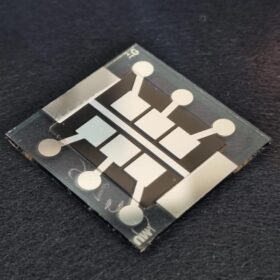
Scientists build high temperature-resistant perovskite solar cell with 26% efficiency
LMU researchers have developed a dual molecular reinforcement strategy for perovskite solar cells that strengthens grain boundaries, improving both durability and performance.

Solar key to space-based AI
Elon Musk, the CEO of both Tesla and SpaceX, raised some eyebrows at this year’s World Economic Forum (WEF) in Davos, Switzerland, when he predicted “that the lowest cost place to put AI will be space and that will be true within two to three years, three at the latest.” pv magazine reported on Musk’s vision on our global website www.pv-magazine.com on Jan. 26, 2026, and exactly one week later SpaceX announced that it was acquiring xAI “to form the most ambitious, vertically integrated innovation engine on (and off) Earth, with AI, rockets, space-based internet, direct-to-mobile device communications, and the world’s foremost real-time information and free speech platform.”
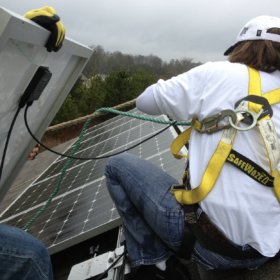
SiteCapture launches AI tool to automate solar field documentation
California-based software provider SiteCapture has launched an AI platform for the US solar market that automates job-site documentation, quality control, and reporting workflows for installers.
