
‘The technology and the capital are available, but the market simply lacks execution capacity’
1Komma5° has acquired a majority stake in Swedish solar installation provider Cellsolar AB. This is the sixth acquisition of the recently founded Cleantech startup which wants to open the installation sector for the capital market in order to allow rapid growth.
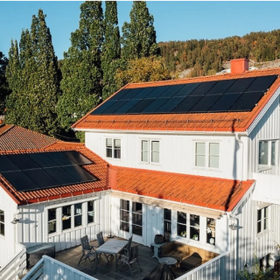
Norway increases support for residential PV
Norway’s clean energy agency Enova will increase the maximum PV system size eligible for rebates from 15 to 20 kW and the maximum subsidy amount from 1,250 to 2,000 NOK ($226.7) per kW installed. In addition, new subsidies of up to 10,000 NOK will be introduced for energy management systems that are often installed alongside solar arrays.
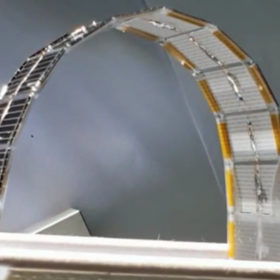
Sun-tracking tessellated photovoltaic array for use in space-restricted areas
Created by scientists in Korea, the shape-transformable 3D PV system is claimed to be able to increase electricity yield by 60% over a day compared to a fixed flat panel due to the shorter shadow length and the bifacial effect obtained during shape transformation. The proposed system doesn’t need any machinery to follow the sun and its developers said it would be a perfect solution for both urban and rural environments with limited space.
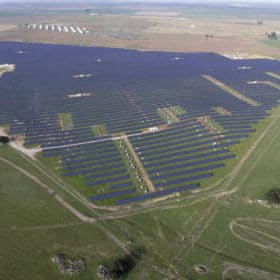
Portugal installed 701 MW of solar in 2021
The country’s cumulative PV capacity reached 1.77 GW at the end of December.
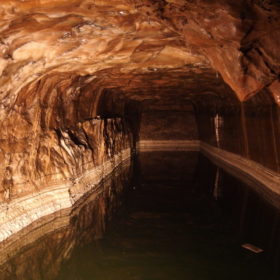
Natural hydrogen exploration ‘boom’ snaps up one third of South Australia
South Australia has found itself at the heart of a 21st-century gold rush, though this time for naturally occurring hydrogen. Since February 2021, 18 exploration licenses have been granted or applied for in the state by six different companies searching for natural hydrogen.
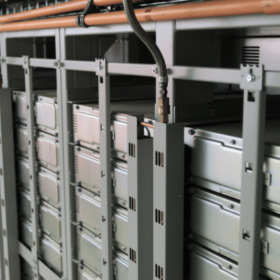
Vistra to expand what was already the world’s largest energy storage facility
Vistra plans a third expansion of the Moss Landing Energy Storage Facility in California.
France publishes first-quarter FITs for PV systems up to 500 kW
The feed-in tariff granted will still be reduced each quarter, in line with how much solar capacity was installed in the previous three-month period, but to a lower extent.
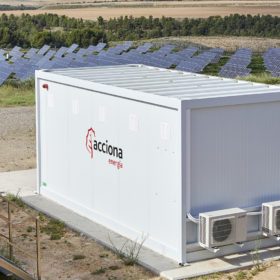
Zinc-bromide batteries to store solar power at Acciona’s testing field in Spain
Gelion’s Endure battery will undergo commercial tests at the 1.2 MW Montes del Cierzo testing field that the Spanish renewable energy company operates in Navarra.
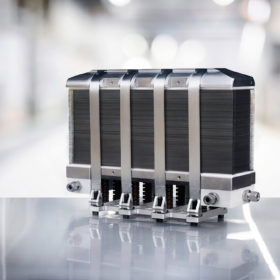
The Hydrogen Stream: Novel fuel cell tech based on liquid-organic hydrogen carrier
Germany’s Schaeffler is developing a hydrogen fuel cell that runs on a liquid organic hydrogen carrier, and Australia’s H2X Global has formed a joint venture with Indian automotive components manufacturer Advik Hi-Tech to manufacture hydrogen fuel cells, generators and vehicles.
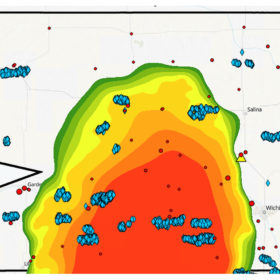
Storing excess energy in underground salt caverns in Kansas
Extensive salt beds lie under the surface in Kansas and the state’s Geological Survey is planning to use them to help address the challenge of intermittent production from solar and other renewable sources.
