
Longi linked to storage shift with reported stake in systems integrator
Longi has reportedly acquired a stake in Suzhou Jingkong Energy, signaling a strategic push into energy storage amid rising profit pressures and heightened competition in the solar sector.
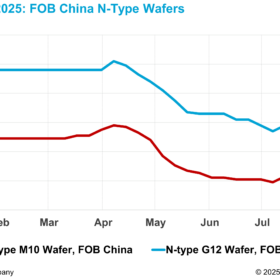
China wafer prices jump nearly 4%, ending three-week lull
In a new weekly update for pv magazine, OPIS, a Dow Jones company, provides a quick look at the main price trends in the global PV industry.
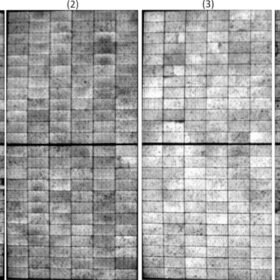
Self-powered electroluminescence for daylight PV system inspection
Scientists from Spain have developed a daylight electroluminescence method that uses other strings to supply current to the inspected string. It was simulated and then tested in two 50 MW PV plants. Comparative assessment against lab-electroluminescence resulted in acceptable diagnostic performance.

KAUST, Franuhofer ISE announce 33.1%-efficient fully texturized perovskite-silicon tandem solar cell
The fully textured tandem cell achieved an open-circuit voltage of 2.01 V and an “extended” outdoor stability in the Red Sea coast, according to the researchers.

Philippines renewables auction awards 9.4 GW, short of 10.6 GW goal
Preliminary results from the fourth renewables auction in the Philippines show 9.4 GW in awarded solar, wind and storage projects, short of the 10.6 GW target, with remaining capacity in floating solar and solar-plus-storage to be reassigned to qualified bidders.

Solar production falls in US Midwest, Southeast amid wildfires and hurricanes
In a new weekly update for pv magazine, Solcast, a DNV company, reports that fire and storm activity across North America shaped solar conditions during August, with irradiance down in central and eastern regions but above average in the northeast.

Nextracker unveils NX PowerMerge trunk eBOS for utility-scale solar
Nextracker has introduced NX PowerMerge, a 2 kV trunk connector-based eBOS solution for utility-scale solar projects, designed to cut connection points, simplify layouts, and lower project costs.
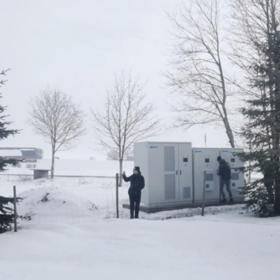
Cold climates are no obstacle for battery storage
China-based battery storage specialist Poweroad is rapidly expanding its global footprint, deploying advanced battery energy storage systems (BESS) even in some of the world’s most extreme climates, where temperatures can plunge to -40°C.
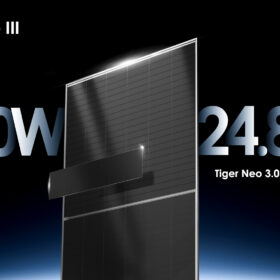
JinkoSolar launches 670 W TOPCon solar module with 24.8% efficiency
The Tiger Neo 3.0 panel features an 85% bifacility factor that translates into 553-570 W of rear side power output, according to the Chinese manufactuer. The new product is claimed to be the “world’s most powerful solar module.”
Italy launches 1.6 GW solar auction
Italy’s second solar auction under the transitional FER X incentive scheme will be finalized in mid-November. Projects over 1 MW in size will have to be built with modules, cells and inverters that are not manufactured in China.
