
The Hydrogen Stream: Japanese researchers develop low-temperature hydrogen battery
Institute of Science Tokyo researchers proposed a battery with magnesium hydride (MgH2) as the anode and hydrogen (H2) gas as the cathode. Meanwhile, researchers at Chung-Ang University proposed chloride-resistant ruthenium (Ru)-based nanocatalysts for direct electrolysis and hydrogen production from seawater.

Chinese PV Industry Brief: Inverter manufacturers report solid H1 results
Sungrow, Ginlong Solis, GoodWe and Deye all posted higher first-half revenue in 2025, with Sungrow leading on storage growth and Deye delivering the strongest margins.
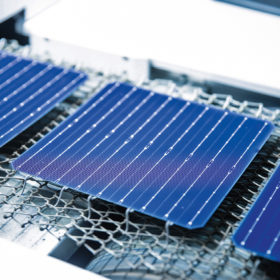
JinkoSolar, Longi settle global patent dispute with cross-licensing deal
China’s two largest solar manufacturers have ended a protracted global patent battle, agreeing to cross-license core technologies in a move that could reshape the industry’s innovation landscape.

‘Progress is happening, but it remains slow’
This week Women in Solar+ Europe gives voice to Maria Gil, Business Development EU at Spain’s Solargrade. She says that real change in the energy industry only comes when companies and institutions move beyond statements and consistently turn policies into sustained action. “As the sector grows and requires more workers, it must bring in talent with equity at its core, ensuring inclusion moves from policy documents into everyday practice,” she states.

Nigeria to establish 1 GW solar panel factory
Nigeria’s Rural Electrification Agency, Infrastructure Corporation of Nigeria and Dutch solar manufacturer Solarge BV are teaming up via a special purpose vehicle to establish and operate a 1 GW solar panel manufacturing facility.
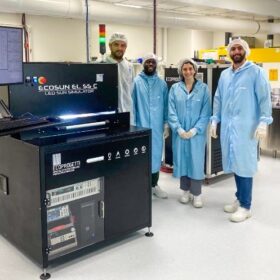
IPVF testing new perovskite solar PV testing platform from Ecoprogetti
The French research institute has added to its perovskite solar cell and module pilot line an Ecoprogetti integrated testing platform that combines a solar simulator with advanced electroluminescence (EL) analysis.
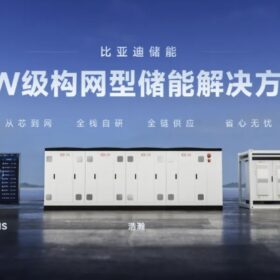
BYD unveils 14.5 MWh storage system, world’s largest yet
China’s EV giant has unveiled the 14.5 MWh DC “Haohan” single-unit DC block with record-breaking capacity to challenge next-generation energy storage market.

Making BESS warranties work: Contracts vs. reality
Striking a careful balance between technical limitations, market ambitions, and contractual realism in operating battery energy storage systems (BESS) is no easy task. Rigid battery warranties can often be a make-or-break factor in BESS asset management. As a result, many industry players now argue that adopting a more flexible approach to warranties could unlock greater value from these inherently flexible assets.

Tiny pinholes can lead to device failure in perovskite solar cells
Researchers in the United States have found microscopic pinholes in perovskites are responsible for the breakdown of such solar cells when under reverse bias conditions. They say the findings should push scientists and engineers to prioritize the production of pinhole-free films to make perovskites more robust and stable.
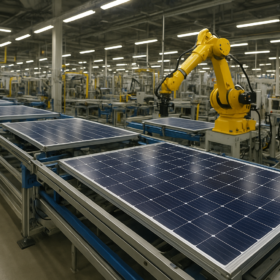
Netherlands ends incentive scheme for domestic PV manufacturing
The Dutch government says large-scale solar panel production is no longer viable, closing its SolarNL incentives to building- and vehicle-integrated products, heterojunction modules, and perovskite-silicon tandem panels.
