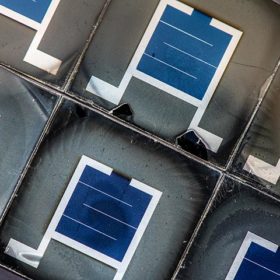
The state of the art in perovskite tandems
A new paper from scientists in China and Canada examines the recent progress in the development of perovskite-silicon tandem cells, finding a technology that’s poised for rapid commercialization, with a few research challenges still to overcome. These are primarily related to ensuring the perovskite layer can match the lifetime of the silicon cell underneath.
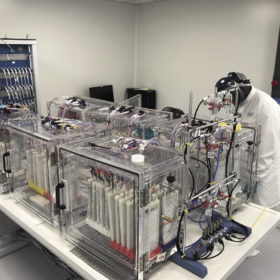
Sweden issues €5m call for battery studies
Researchers have just under four weeks to apply for backing for their projects, in areas including battery reuse and recycling, circular manufacturing and supercapacitors.
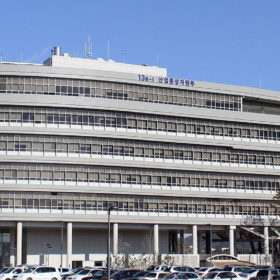
South Korea opens its renewable energy market to PPAs
Power purchase agreements will be allowed between renewable energy producers owning plants with a capacity of more than 1 MW and electricity consumers. Local utility Kepco, however, will keep serving as an intermediary.
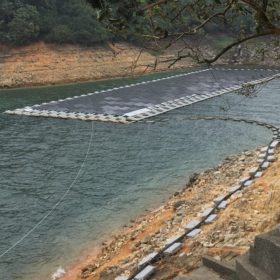
India to host ‘world’s biggest floating PV plant’ within two years
The 2,000ha installation, which will surpass in scale a 150 MW plant in China’s Anhui province, will reportedly require a INR3,000 crore ($409 million) investment.
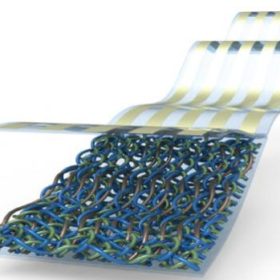
Herbicide may improve organic cell efficiency by up to 1.6%
Researchers in Saudi Arabia claim to have increased the efficiency of organic PV devices with diquat, a compound used in herbicide. The molecular diquat dopant increased optical absorption and the lifetime of electrical charges when light was absorbed.
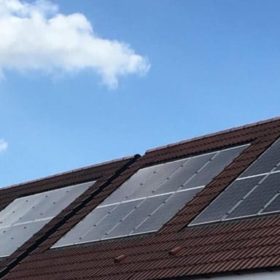
Eon enters UK rooftop PV business
The German energy company has acquired a 49% stake in U.K. installer Eco2solar. The British company offers solutions for commercial and residential projects.

Indian reliance on polycrystalline tech production leaves it trailing China
Polycrystalline PV technology, which is seeing its market share tumble on the global stage, still dominates India’s small solar manufacturing base and is emblematic of the R&D shortfalls in the sector, according to a survey of the state of the industry.
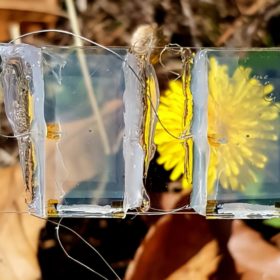
New solar window tech with 2.1% efficiency
Researchers in South Korea have fabricated a fully transparent solar cell which they claim has a transmittance for visible light of more than 57%. The integrated device generates enough power to move a small-sized motor.
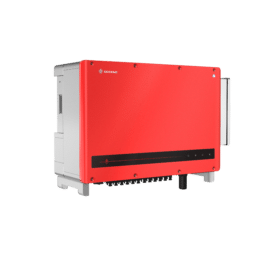
GoodWe launches 1500 V string inverter series
The two devices of the series have, both, an efficiency of 99%. With this new inverter series, GoodWe has made its first step into the large scale PV business.
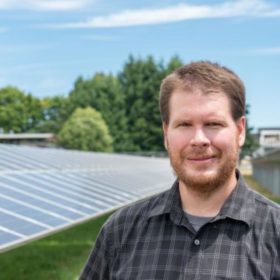
Could agrivoltaics feed demand for clean energy?
Agrivoltaics could result in more food, more energy, lower water demand, lower carbon emissions, and more prosperous rural communities, says an Oregon State University researcher. He plans to build a farm to prove the point.
