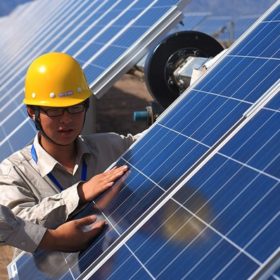
Chinese PV Industry Brief: Longi continues construction of ingot fab as GCL finds a buyer for six PV farms
Longi has started construction of its 10 GW ingot factory in Yunnan, CLYPG signed PV project contracts for up to 32.6 GW in 2020 and GCL has agreed to sell PV parks with a combined capacity of 321 MW. Polysilicon prices, meanwhile, continue to rise while those of solar glass are falling.

Rooftop solar, storage and EVs in India
The combination of rooftop solar and storage is a big opportunity. A new report highlights Australia – a nation with the world’s highest per capita rooftop PV capacity – as a guide for Indian policymakers.
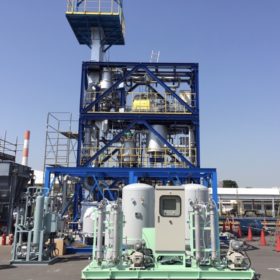
The Hydrogen Stream: Projects move forward in China, Japan, Australia and across several European countries
Sinopec wants to build 1,000 hydrogen refueling stations by 2025. Ways2H is building a facility in the Tokyo area that will convert daily 1 ton of dried sewage sludge into 40-50 kilograms of hydrogen for fuel cell mobility and power generation. Ørsted wants to deploy two renewable hydrogen production facilities for a total of 1 GW by 2030. Wacker Chemie is planning to produce green hydrogen and renewable methanol at its German site.
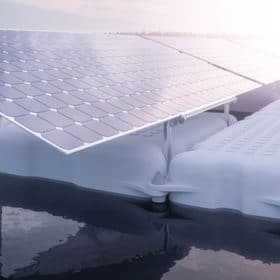
Weekly Round-Up: Floating PV in Spain, Albania, unsubsidized solar in Germany, Portugal
Albanian utility KESH has secured funding for its 12.9 MW floating solar plant and, in Spain, the Port of Malaga is planning a 2.1 MW floating facility. Construction began on two unsubsidized solar plants in Germany and Portugal. Enel and Sterling & Wilson will build two large solar plants in Peru and the US, respectively.

New design for antireflective coating in multijunction solar cells
Scientists in Madrid investigated the use of antireflective coatings in multijunction solar cells, drawing several conclusions that could further improve the efficiency of these cells. Their approach could improve on current antireflective coatings, particularly for high-efficiency multijunction cells, using methods and materials already proven in mass production.
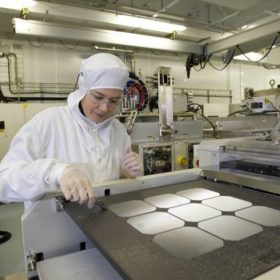
REC postpones investment decision for 4 GW French solar factory to second quarter
The chosen location is Hambach, in the northeastern region of Moselle. The planned investment is €680 million.
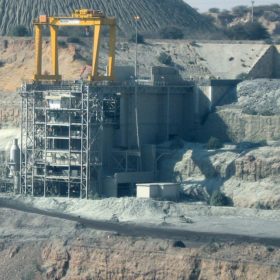
Botswanan diamond mining company launches tender for small solar park
Diamond Trading Company Botswana is seeking proposals for a 600 kW ground-mounted PV plant to power operations at its mining site in Gaborone.
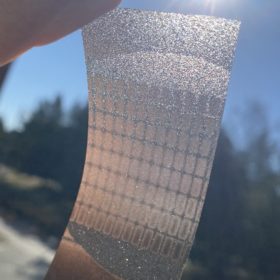
Monograin layer solar cell with 6.4% efficiency
The lightweight and flexible cell was built by Estonian researchers with microcrystalline powders. The device is claimed to be the most efficient solar cell fabricated with a semiconductor compound known as Cu2CdGe(SxSe1−x)4.
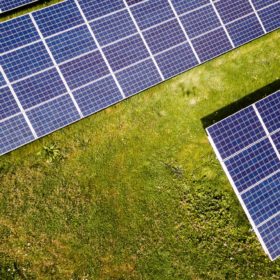
Xinte highlights Chinese polysilicon ‘oligopoly’
The TBEA-owned poly manufacturer has predicted further consolidation as it aims to ramp up output with another 100,000 tons of annual production capacity.
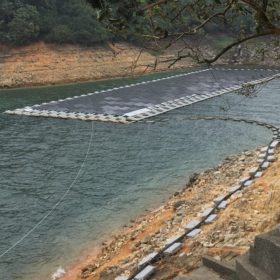
Australian utility to build floating PV plant, 200 MW battery
AGL Energy has revealed plans for a floating PV project at its Loy Yang power station in Victoria, Australia. The energy giant is already producing brown hydrogen for export to Japan, and has applied for a 200 MW battery at the Loy Yang site.
