
Solarium commissions 1 GW solar module plant in India
Rooftop solar company Solarium Green Energy has commissioned a 1 GW solar module manufacturing facility in Ahmedabad, Gujarat, producing large-format G12 modules up to 725 Wp and serving both internal and external customers.
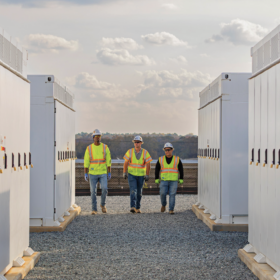
On-site batteries accelerate grid access for data center developers
Battery energy storage systems (BESS) are increasingly used in uninterruptible power supply (UPS) applications for data centers and to speed grid connections, offering services beyond what gas turbines can provide, including emerging approaches such as bring your own capacity (BYOC) and flexible grid connections (FGC).
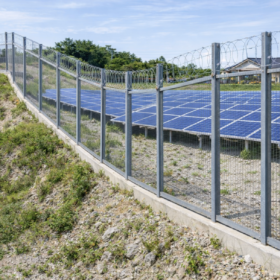
Japanese firm GBP launches fencing for solar and BESS sites
GBP K.K., a Japan-based clean energy infrastructure company, has launched perimeter fencing systems for grid-scale solar and battery energy storage system (BESS) sites, targeting security in difficult terrain and noise mitigation near residential areas.
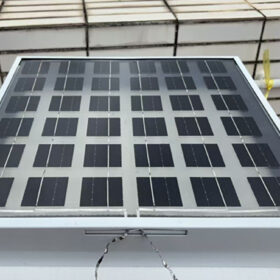
Thermochromic bifacial PV glazing system for reducing building cooling loads
Researchers in Hong Kong Hong Kong fabricated a thermochromic bifacial photovoltaic glazing system prototype that passively regulates solar heat gain while harvesting energy from both sides. Experiments and simulations showed it significantly reduces cooling loads and indoor temperatures while boosting electricity generation.
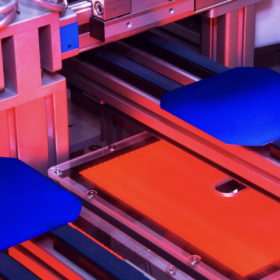
US wafer origin rules put solar domestic content bonus at risk
A legal alert from Wiley says US Department of the Treasury and Internal Revenue Service (IRS) guidance could disqualify solar cells using imported silicon wafers from the 10% domestic content bonus under the Inflation Reduction Act.

Ariston launches residential propane heat pump with built-in PV function
The Italian heating solutions provider said its new Nuos Plus S2 Wi-Fi heat pump system offers up to 80% energy savings and a coefficient of performance of up to 3.51.
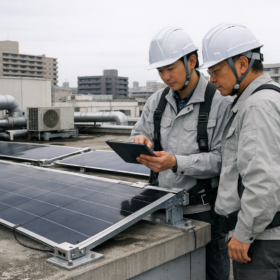
Japan publishes new guidelines for flexible solar cell installations
Japan’s New Energy and Industrial Technology Development Organization (NEDO) says its new design and construction guidelines for flexible PV and perovskite solar installations will help ensure the safety and reliability of systems deployed on low-load rooftops and wall surfaces where conventional panels cannot be installed.
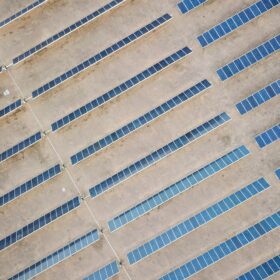
South Africa’s largest PV project reaches financial close
A 620 MW solar project to be constructed in South Africa’s Free State has reached financial close. The milestone follows the signing of a more than 20-year multi-offtaker wheeling agreement with commercial and industrial clients.
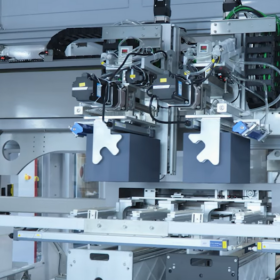
India’s PV module manufacturing capacity tops 210 GW
India added 119 GW of solar module capacity and over 9 GW of cell capacity in 2025, bringing total capacities to about 210 GW and 27 GW, respectively, according to Mercom India. Growth was driven by strong project demand and policy support, although supply-demand alignment is expected later in 2026 as domestic cell production ramps up.

Solar-to-X could redefine Iran’s energy future
Iran is widely known for its oil and gas resources, but its strongest long-term energy asset may be the sun. New research shows how solar PV could drive a cost-competitive transition across power, heat, transport, industry, and desalination, while opening the door to a broader Solar-to-X Economy.
