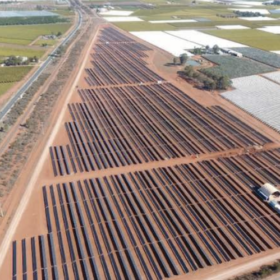
Australia’s first digitized PPA
The 9.4 MW Robinvale Solar Farm is Suntech’s first 100%-owned project in the Australian pipeline to come to fruition and the first solar project in the country to deploy WePower’s blockchain-based PPA architecture, which opens up opportunities for smaller corporate customers to go green with their procurement strategies.
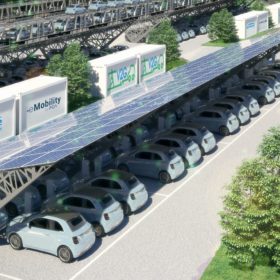
EV batteries providing grid stabilization services at Italian car factory
Fiat Chrysler has begun construction of a vehicle-to-grid pilot at its Mirafiori manufacturing facility in Turin. The project, which also includes 5 MW of PV, will eventually become a virtual power plant.
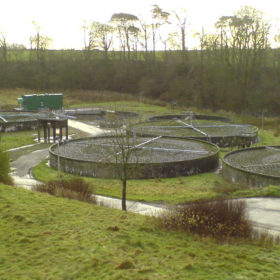
Scottish Water launches tender for solar projects up to 5 MW
The Scottish water provider is seeking proposals for the development and construction of several solar plants ranging in size from 50 kW to 50 MW. The installations can be a combination of ground-mounted PV systems and rooftop arrays.

Green finance is more than a bubble
Felicia Jackson explains why green finance is changing the energy world and is not just a dream for solar fans. Hailing from London, she is a financial expert, a co-founder of New Energy Finance, now Bloomberg NEF, a member of the UN working group that discusses methods for environmental goals, and a professor at the University of London. Jackson will also author a pv magazine white paper on the topic, scheduled to publish this summer.
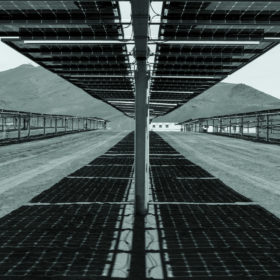
Single-axis bifacial PV offers lowest LCOE in 93.1% of world’s land area
Researchers from the Solar Energy Research Institute of Singapore have concluded that utility-scale PV projects relying on bifacial panels and single-axis trackers deliver the lowest levelized cost of energy in most of the world. They found that the combination of bifacial products with dual-axis trackers is still too expensive, despite the higher yield. The second-lowest LCOE is offered by monofacial single-axis tracker plants.
Game theory for solar module manufacturing
Researchers in Iran have applied the Stackelberg leadership model to determine whether the creation of a closed-loop solar module supply chain – including panel refurbishing – is feasible. According to their findings, a similar supply chain may only be set up with public subsidies, which would ensure that costs for R&D, module production, and recycling are distributed between the government and all the chain’s players.
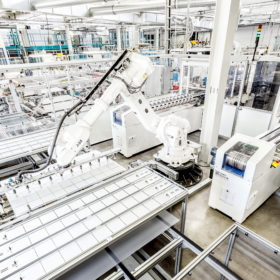
teamtechnik receives stringer order for 400 MW German fab
German equipment manufacturer teamtechnik announced it has received an order from a European module manufacturer for several stringers to process nine busbar half cells. Already a major trend among module makers in China, 9BB technology now looks to be headed further afield.
Autarco unveils rooftop module series
The Dutch PV system provider’s MHI panels feature multi-busbar technology and 120 half-cut, monocrystalline cells. The series has a power output of 355-375 W and efficiency of 19.2-20.3%.
A ten-year PPA for 50 MW Spanish project
Dutch solar developer Sonnedix will supply Norwegian renewables company Statkraft with around 100 GWh of green electricity annually from 2021 to 2031. The electricity will be generated by a solar plant planned in Badajoz. Sonnedix also announced the acquisition of 4.6 MW more Spanish solar capacity.
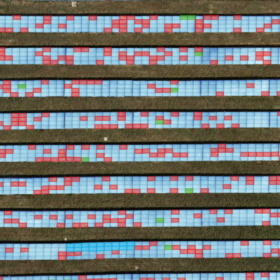
Choosing representative strings for measuring power loss
Analyzing monitoring data does not always accurately identify under-performing assets; and when investigating supposed power loss with IV-curve measurements, a representative sample via thermography should be selected. These are two conclusions drawn from a case study, which will be discussed during the upcoming asset management session at the pv magazine virtual roundtable Europe 2020.
