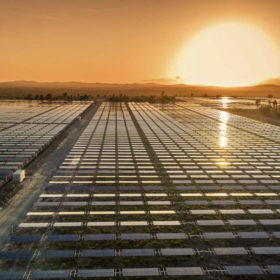
Falling power prices could benefit mega-sized solar and wind projects
The Covid-19 pandemic will create a “perfect storm” for Australia’s wholesale electricity market, as lower demand comes together with lower gas prices and the commissioning of large-scale solar and wind projects to depress power prices, according to a report by Melbourne-based consultancy RepuTex.
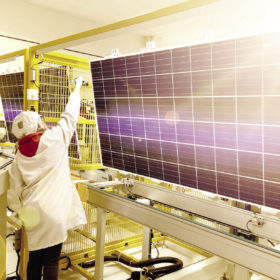
Canadian Solar calls Solaria’s ‘shingled’ cell patent claim ‘meritless and unfounded’
The patent infringement claim concerns a process for separating photovoltaic strips from silicon solar cells for use in more-efficient tiled or “shingled” solar panels.
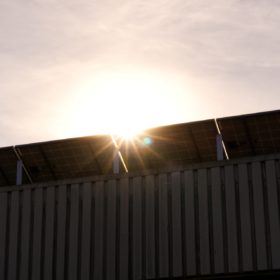
New technique to determine best cooling technique for solar modules
A new paper published by researchers at Malaysia’s Multimedia University provides a new method to assess the effectiveness of different cooling systems for photovoltaic modules. The proposed technique relies on measuring the output of the module with added cooling and comparing this to its power rating under standard test conditions.

A closer look at clouds to optimize energy forecasts
A group of scientists in the United States has developed a weather forecasting model designed to better predict the solar irradiation that a given area will receive. The model uses satellite data to estimate the light transmission properties of clouds, a metric often overlooked in standard weather forecasting, but nonetheless vital in modeling PV energy yield.
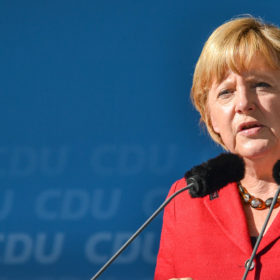
Covid-19 daily bulletin: Grim news from US and Australia but pandemic is not solely to blame
The U.S. solar industry experienced a wave of job losses last month and the public health crisis has driven foreign exchange losses which will jeopardize projects Down Under, but it is Angela Merkel’s government which is attracting the ire of German PV installers.
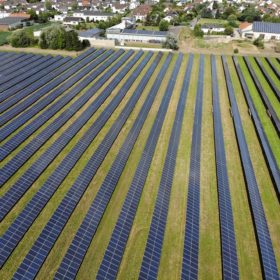
Would solar decarbonize French energy – or just replace nuclear?
A thinktank has studied whether increased solar energy would contribute significantly to reducing the carbon footprint of the French and European electricity systems in an attempt to respond to a common French refrain the nation needs no further decarbonization of energy because it has nuclear power.

Renewables and geopolitics: Who will ‘win’ the energy transition?
The losers in a world which no longer runs on fossil fuels are obvious but the dividend from shrugging off hydrocarbon dependency will be spread around most of the world so it is the nations which are winning the cleantech manufacturing and intellectual property race which appear best positioned for the future.

Solar tender in Mauritius
The island nation’s Agricultural Marketing Board is seeking proposals for a ground-mounted PV plant. Developers have a week to submit bids.
Europe can be 60% powered by solar before 2050
Perhaps it is not surprising a report co-produced by Europe’s solar industry places PV at the heart of a zero-carbon, mid-century energy system on the continent. However, the study does flesh out two out of three scenarios in which becoming carbon-neutral by 2050, or even 2040, could be possible.
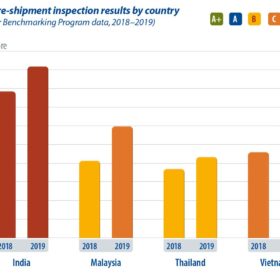
Quality benchmarking in times of tariffs
The PV industry’s rapid factory expansions and quick product rollouts lead to a constant balancing act between the streamlining of production and the introduction of new features to push the boundaries of power generation and achieve lower LCOE. Given these competing factors, CEA has brought together its data based on experience in providing third-party quality assurance oversight to produce its Supplier Benchmarking Program. Joseph Johnson, CEA’s lead analyst for solar and storage, digs into the data.
