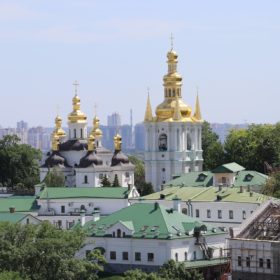
Ukraine has 350 MW of solar under net metering
Around 240 MW of new installations were deployed from October 2018 to the end of September and approximately 70 MW were installed in the third quarter of last year alone, according to the responsible state body.
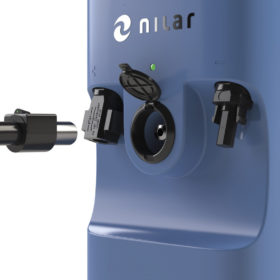
Storage Highlights 2020 – Megawatt Winner: Nilar
With the new decade, pv magazine brings forth yet another energy storage highlights. Approximately two weeks of work went into sifting through this year’s 22 highlights submissions, conducting research, and preparing them for the jury. Once again, this year’s work was crowned by the moderation of the jury meeting, in which six leading industry experts discussed the technologies and solutions. Differing from previous years, the jurors have selected the top five “Gigawatt” winners, followed by five “Megawatt” winners, and a series of “Finalists” which we are publishing here, leading up to Energy Storage Europe.
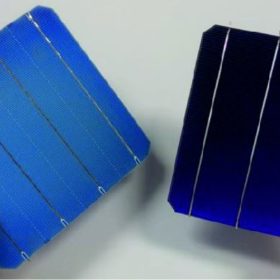
A graphene-doped tandem perovskite cell with 26.3% efficiency
Italian researchers have added graphene to the titanium dioxide electron selective layer used in a perovskite cell to increase chemical stability. The two-terminal cell was made by stacking two sub-cells which were fabricated and optimized separately.
Debt-saddled solar developer has state appointee take over as chairman and CEO
Zhang Ping, a 30-year coal-fired power industry veteran, has taken the helm at Hong Kong-listed Panda Green, days after a $230 million bail-out by state-owned Beijing Energy Holding Co Ltd.
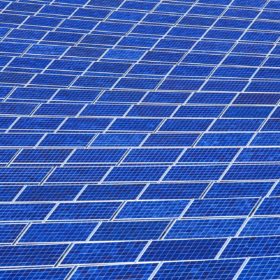
Dutch golf club to diversify with 147 MW solar park but will grid congestion bunker the plans?
PV project developer Solarfield is planning to build a plant under the SDE+ renewables incentives program. Construction is planned to start in 2021. The solar park will be in the province of Flevoland, one of the areas where grid congestion is jeopardizing the deployment of large scale solar.

Uzbekistan launches 400 MW solar tender
The central Asian nation and the International Finance Corporation are seeking proposals for two 200 MW solar parks planned in the Samarkand and Jizzakh regions. The projects will be awarded 25-year power purchase agreements.
First Solar announces surprise fourth-quarter loss, considers sale of development business
‘First Solar, at its core, is a technology and module manufacturing company,’ said Mark Widmar, chief executive of the U.S. company.
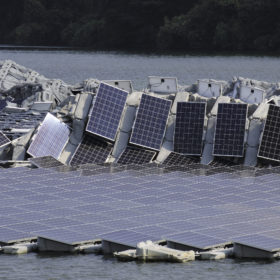
The weekend read: Don’t throw caution to the wind
Japan’s Ministry of Economy, Trade and Industry (METI) has opened a formal investigation into the exact failure mode behind the destruction at the Yamakura Dam floating PV installation. In the end, the ministry seeks to draw up a plan to revamp not just the dam, but also the arrays that are still intact. This is a learning exercise that should be closely followed, as floating PV is enjoying growing popularity.
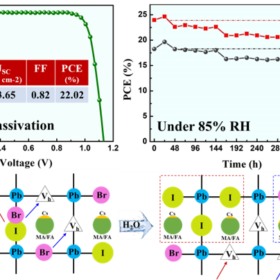
Moisture-resistant perovskite cell with 22.02% efficiency
Scientists in China have used a fluorine-containing Lewis acid treatment to develop a perovskite cell that is said to retain between 63% and 80% of its initial efficiency after 14 days under 75% and 85% relative humidity.
Tesla can continue to cut trees for German ‘gigafactory’
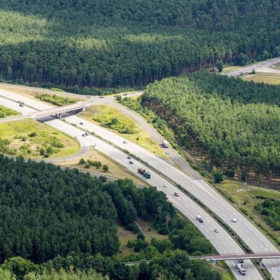
The company has secured approval from the Berlin-Brandenburg administrative court to start clearing 91 hectares of forest for its first European “gigafactory,” which is scheduled to start operations in summer 2021.
