
DEWA’s Mohammed bin Rashid solar park capacity hits 3.8 GW
Dubai Electricity and Water Authority (DEWA) says it has added 800 MW of solar to its flagship Mohammed bin Rashid Al Maktoum Solar Park this year alone. By the end of the decade, the site’s cumulative capacity is set to reach 7.26 GW.
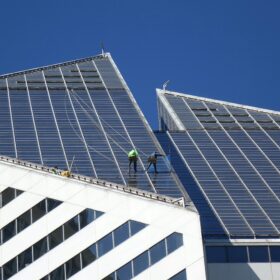
Solar companies adapt in changing times
pv magazine USA speaks with Solar Insure’s Dean Chiaravallotti about how solar companies can adapt business models, innovate product offerings, and deploy strategic tools to remain competitive in a shifting US market.
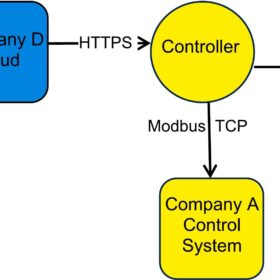
Coupling heat pumps with district heating
Researchers in Sweden have analyzed the impact of a hybrid heating system combining heat pumps and district heating on five real buildings. The analysis showed that residents were able to save up to €2,768 ($3,159) compared to a scenario without source coupling.

Fraunhofer ISE tests cesium lead perovskite in perovskite-perovskite-silicon triple junction solar cell
Fabricated via thermal evaporation, the champion perovskite-perovskite-silicon triple-junction solar cell reached an efficiency of around 22% after 110 hours of fixed-voltage operation under ambient conditions without encapsulation.
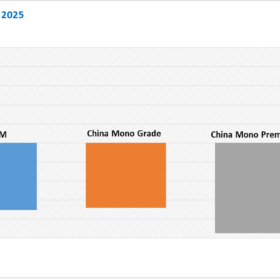
China polysilicon prices fall 11.76% since early April peak
In a new weekly update for pv magazine, OPIS, a Dow Jones company, reports thatglobal polysilicon negotiations remain challenging, as buyers and sellers continue to struggle to reach agreements on pricing amid a persistent supply-demand imbalance. Furthermore, it reveals that China’s polysilicon futures market could imply a further 13% drop for Nov 2025 delivery contracts.

Global renewable energy pathfinding
Australia is tracking towards 75% electricity from solar and wind in 2030, which makes it a global energy transition pathfinder. Pathfinders are important because they learn to solve new problems and disprove misinformation and disinformation.
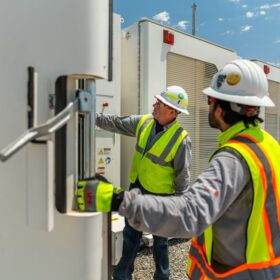
Cybersecurity as a powerful tool to enable resilient energy storage projects
Compliance with ever-increasing cybersecurity regulations is a challenge for many in the energy storage industry but it creates big opportunities for risk-mitigation. Katherine Hutton and Lars Stephan, from energy storage integrator Fluence, take a closer look at cybersecurity compliance risks and how investors can mitigate revenue losses with a clear strategy.
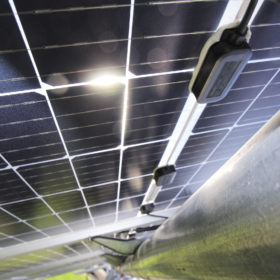
Global solar tracker shipments reach 111 GW in 2024
The United States continues to dominate the solar tracker market, with Nextracker securing the top spot globally in 2024.
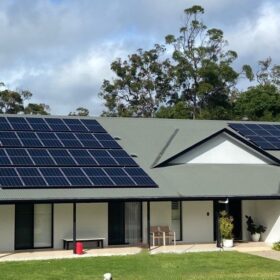
Cost of living, government rebates accelerate Australia’s solar and battery booms
Recent studies forecast Australia is on the precipice of a rooftop solar and household battery boom, predicting record breaking installation numbers driven by falling battery and solar module prices, government rebates and cost-of-living pressures.
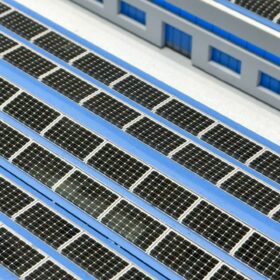
UK small-scale solar costs tumble as competition heats up for installers
Figures for 2024-25 financial year reveal double-digit percentage drop in median price for UK small-scale solar. Falling prices were driven by increased supply and technology advancements, according to DESNZ, while installer warns new rooftop opportunities could come with tighter margins.
