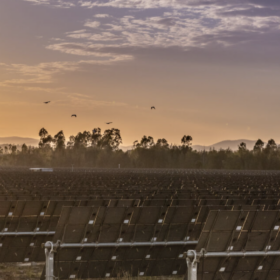
Genex cuts Bulli Creek solar to 300 MW, adds 1.7 GWh storage
Genex has announced plans to reconfigure the first stage of its 2.5 GW Bulli Creek multi-stage development in Australia from a 775 MW solar farm to 300 MW, adding a 425 MW / 1,700 MWh battery energy storage system (BESS).
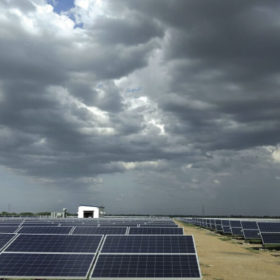
AI model uses cloud type and cover to predict solar power swings
A machine learning model uses cloud type and cloud cover to predict rapid changes in surface solar irradiance, including short-term “ramp” events that affect grid stability. When tested across 15 global sites, it showed strong generalizability, with most locations matching or exceeding the original model’s predictive performance, though extreme climates performed less consistently.
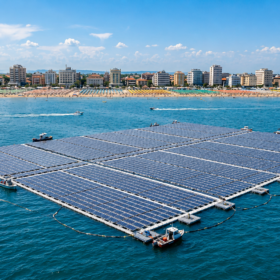
Offshore floating PV could technically meet Italy’s electricity demand
New research identified the most suitable areas for offshore floating PV deployment in Italy using a geospatial multi-criteria assessment model. The study found that exploiting just 2% of Italy’s technically feasible offshore solar area could theoretically generate enough electricity to meet the country’s annual power demand.

US solar makers accuse Toyo and Origin Solar of duty evasion in Ethiopia
Eight US solar manufacturers have filed an anti-circumvention complaint with the US Department of Commerce, alleging that solar cells and modules assembled in Ethiopia using Chinese-origin components are evading existing antidumping and countervailing duty orders on Chinese solar products.
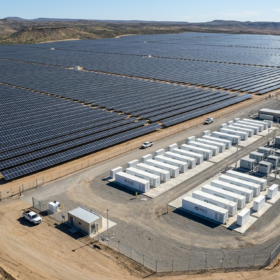
Solar approaches 3 TW, but the industry faces new challenges
Global solar PV capacity reached around 2,974 GW by end-2025, with nearly 698 GW added in 2025. The sector, however, is shifting from rapid deployment to integration challenges, as high penetration rates drive curtailment, storage demand, grid constraints, and evolving policy and market designs.

India’s storage market shifts from tenders to execution
Ratul Puri, chairman of Hindustan Power, tells pv magazine that India’s battery energy storage system (BESS) market is moving from aggressive tendering toward large-scale project execution, as the country increasingly prioritizes grid integration, transmission readiness and long-term supply resilience.
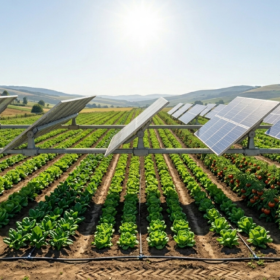
Plug-and-play control framework for adjusting panel tilt in agrivoltaics
A Cornell University research team developed a control framework that simultaneously considers past and future conditions when determining solar panel tilt angle. The researchers told pv magazine it is designed to be plug-and-play, allowing for software developers and solar operators to incorporate their optimization algorithms directly into the framework.
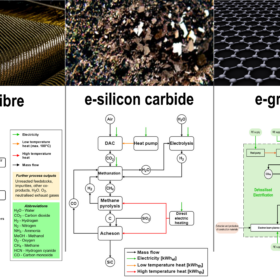
Low-cost solar PV can turn CO2 into profitable materials enabling negative emissions
Low-cost solar PV enables to turn CO2 from an unwanted burden into a precious raw material and sequestered in materials with many applications. This effectively reframes carbon capture, utilization, and sequestration as a monetizable carbon dioxide removal option. Three recent studies on electricity-based carbon fiber, silicon carbide, and graphene aimed at enabling large-scale negative emissions by 2050.

Hanwha Japan unit closes JPY 9 billion solar fund loan
Sumitomo Mitsui Banking Corp. (SMBC) has arranged a JPY 9 billion ($57 million) syndicated loan for Q.ENEST Holdings, the power business spun out of Hanwha Japan in 2023, to finance an 80 MW portfolio of distributed low-voltage solar assets across Japan.
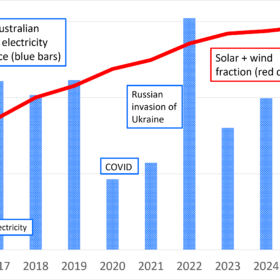
Very low cost rooftop solar and batteries slashes domestic energy cost – Part 1: Australia
Rooftop solar in Australia provides the cheapest, cleanest and most reliable domestic energy in history.
