
Malaysia launches new net metering scheme for rooftop PV
Effective since January 1, 2026, the Solar Accelerated Transition Action Programme (Solar ATAP) aims to build on Malaysia’s previous net metering program’s efforts to maximize the use of rooftops for solar generation by incentivizing consumers to export excess generation to the grid. The capacity limit has been set at 100% of the consumer’s maximum demand, or 1 MW.
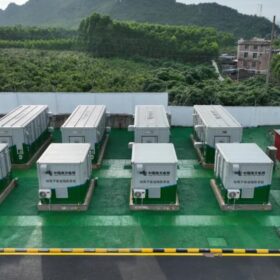
Sodium-ion battery cells already near lithium-ion cost parity, set to get cheaper
By 2050, sodium-ion batteries with fast learning rates could deliver storage at 11–14 €/MWh – cheaper than lithium-ion at 16–22 €/MWh – while also offering higher energy-to-power ratios and high cycle durability, a new research finds.

How to avoid ‘long tail’ effects in large-scale PV plants
New UNSW research found that about 20% of solar modules in large PV plants degrade much faster than expected. They recommend holistic strategies such as robust materials, advanced designs, and proactive monitoring to decouple degradation pathways and prevent cascading failures.

China’s competition regulator halts $7 billion plan to consolidate polysilicon industry
China’s antitrust regulator has halted an industry-led effort to reduce polysilicon capacity and coordinate pricing, ordering full rectification of actions that contributed to rising market prices. Futures fell sharply after the intervention.
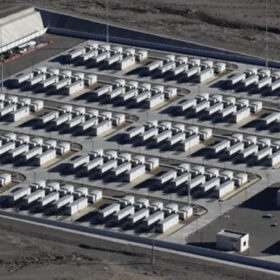
China’s switches on world’s first GWh-scale supercapacitor-energy storage project
The 500 MW/1 GWh Jiayuguan NingSheng project combines lithium batteries and supercapacitors to support grid stability and renewables integration.
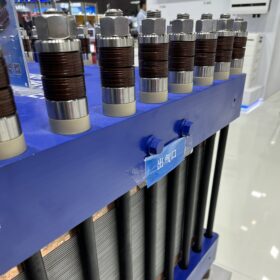
Hydrogen faces ‘year of reckoning’ in 2026, says Wood Mackenzie
Wood Mackenzie’s 2026 market outlook for hydrogen expects non-biological origin hydrogen to gain momentum and ammonia crackers to reach commercial scale but predicts the Middle Eastern market to retreat and the EU to abandon its industrial hydrogen mandates.

India’s smart metering boom reshapes grid through decentralized IoT
India’s power system is rapidly decentralizing as electricity demand, rooftop solar, electric vehicles, and distributed generation expand, turning a one-way grid into a dynamic network that increasingly depends on decentralized data systems such as RF mesh networks.

California introduces bill to legalize plug-in balcony solar
A new bill in California is designed to allow small plug-in solar systems to connect directly to household outlets by reclassifying them as appliances, removing utility interconnection and permitting requirements.
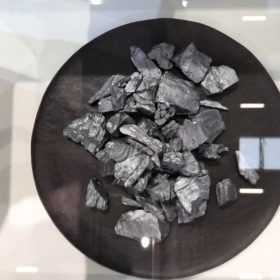
Chinese PV Industry Brief: Polysilicon prices jump over 9% as China supply tightens
Polysilicon prices in China rose sharply this week as reduced output, higher costs, and strong downstream demand pushed transactions above CNY 60,000 ($8,590) per metric ton (MT). Module prices, however, remained stable, supported by firm procurement and tight wafer supply.

New multi‑hotspot detection tech based on Lab* feature descriptor
A Husqvarna researcher developed a fast, interpretable PV hotspot-detection method using IR thermography and Lab* color-space features instead of heavy neural networks, achieving up to 95.2% accuracy with shallow classifiers. The lightweight system works in real time on drones or edge devices and could save 17,620 kWh and 8.9 tons of CO₂ annually by improving fault detection in solar panels.
