
Semi-translucent solar window based on concentrated photovoltaics
Researchers in Spain have designed a PV window that performs active daylighting management while producing electricity. The system can reportedly ensure high power density, as it harvests all the direct light incident on the aperture area.

Key takeaways from France’s BePositive trade show
Installers at France’s recent 2025 BePositive trade show embraced storage to boost self-consumption, as new PV tariffs and regulatory shifts are stirring concern among smaller companies.

Acciona secures loan for 480 MW of solar in Australia
Spanish developer Acciona has closed a AUD 453 million ($284 million) syndicated green loan for the construction and operation of its 480 MW Aldoga Solar Farm in Queensland, Australia.
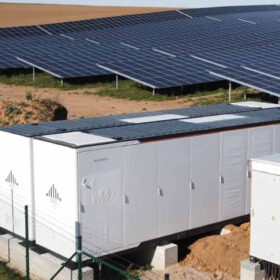
China’s battery storage capacity doubles in 2024
Installed capacity exceeds 62 GW in China as the market shifts toward large, centralized systems with power outputs greater than 100 MW.
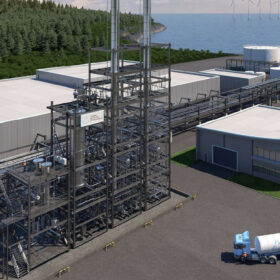
Will the green hydrogen dream take shape?
After a global flurry of green hydrogen announcements, fuel cell company insolvencies, and a sharp market reassessment, solar developers are questioning near-term green hydrogen demand. pv magazine’s Carrie Hampel takes a look at the international landscape.
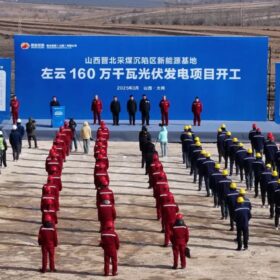
Jinneng launches 5 GW solar project in coal zone in China
China’s Jinneng Group has started building 5 GW of solar across three projects in a coal mining subsidence zone in northern China, with a $2.3 billion investment. The projects, bolstered by 2 GW of thermal power and 3.4 GWh of energy storage, will supply 9.3 TWh of clean electricity per year.
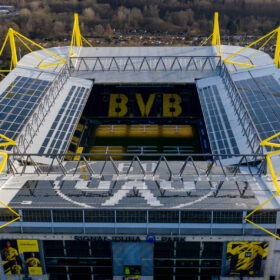
European Solar Manufacturing Council urges Borussia Dortmund not to use JA Solar modules
The European Solar Manufacturing Council (ESMC) has criticized Borussia Dortmund’s decision to install 11,000 JA Solar panels on its stadium roof, citing the supplier’s exclusion from the US market over alleged links to forced labor. JA Solar responded to these accusations stating that SolarPower Europe’s Solar Stewardship Initiative (SSI) previously investigated its supply chain and found that it didn’t violate the SSI Principles
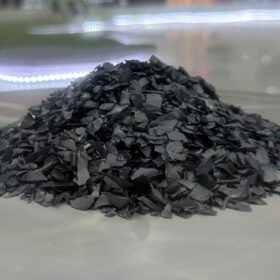
Chinese PV Industry Brief: GCL completes switch to FBR polysilicon production
GCL Technology has posted CNY 15.1 billion ($16.7 billion) in revenue and a CNY 4.75 billion net loss for 2024. The Chinese polysilicon and solar module manufacturer says its current annual capacity is 480,000 metric tons (MT).

U.S. reshapes the non-China solar supply chain
The U.S. Department of Commerce (DOC) revised antidumping and countervailing duties (AD/CVDs) on Vietnamese and Malaysian solar products in December 2024. The move has reshaped the non-Chinese supply chain, with further use of tariffs likely under the new administration, explains InfoLink’s Corrine Lin.

Hungary adds 1.4 GW of solar in 2024
Utility-scale solar accounted for around half of new solar in Hungary last year, but with no new connection permits for large-scale projects over the last two years, this market segment is predicted to slow in the coming years.
