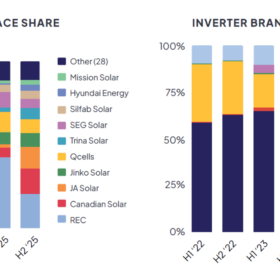
Expiring US tax credit drives record solar demand in H2 2025
EnergySage says the looming expiration of the federal residential solar tax credit drove a 205% surge in homeowner engagement in the second half of 2025, with median pricing of $2.49/W, an average system size of 11.8 kW, and a decline in storage attachment rates as customers rushed to install systems before the end of the year.

Indian researchers build transparent perovskite-silicon tandem solar cell with 30.2% efficiency
The transparent four-terminal perovskite solar cell employs an ion-modulated spiro-MeOTAD hole transport layer, which passivates interfacial defects, enhances carrier dynamics, and allows for a tunable work function in wide-bandgap perovskites. When integrated into mechanically stacked 4T tandems with an n-TOPCon cell, the device achieved an overall efficiency of 28.4–30.2%, along with improved open-circuit voltage and fill factor.
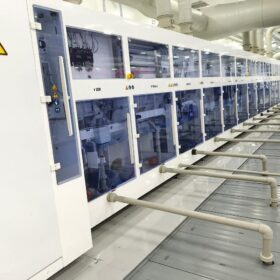
Premier Energies unveils India’s first zero-busbar TOPCon solar cell
Premier Energies Ltd today unveiled India’s first zero-busbar (0BB) TOPCon solar cell at Intersolar India. The 0BB design marks a structural shift from traditional 10BB and 16BB architectures, replacing thick silver busbars with a dense matrix of ultra-fine silver lines to collect current.

India expected to install about 42.5 GW of new solar capacity in 2026
India installed around 37.8 GW of solar capacity in 2025, according to JKM Research. This comprised about 28.6 GW of new utility-scale solar, a 54.6% increase from 2024, and 7.9 GW of rooftop solar, up 72% year on year. Off-grid additions stood at 1.35 GW, compared to 1.48 GW in 2024.
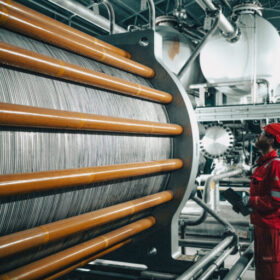
The Hydrogen Stream: ACES 220 MW Utah project nears completion
HydrogenPro says its 220 MW ACES Delta project in Utah is nearing completion, with all electrolyzers operating at full load, while the hub will store hydrogen in salt caverns with energy capacity two to three times that of all US grid-connected batteries combined.

Bluetti launching Elite 300, world’s smallest 3 kWh portable power station
The Bluetti Elite 300, packing more power than ever into a small form, will be available with early-bird discounts from March 8.
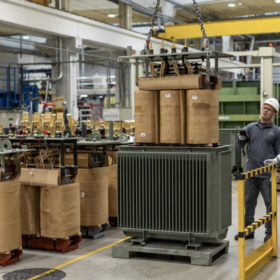
Global energy transition hits a hardware bottleneck
As transformer lead times double and US prices surge 79%, a manufacturing “supercycle” struggles to keep pace with the explosive growth of AI data centers and renewable energy.
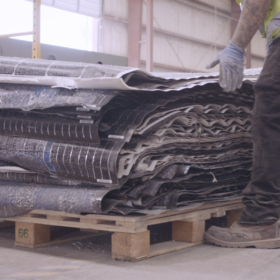
The richest silver mine isn’t underground but in solar
As primary silver grades decline and solar demand surges, the industry must transition from viewing retired panels as waste to treating them as high-grade mineral reserves essential for the energy transition.
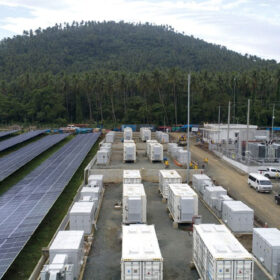
Philippines mandates energy storage for renewables plants over 10 MW
Department of Energy (DOE) order sets out new rules for mandatory energy storage, including a minimum capacity of at least 20% of the generating plant’s installed capacity. DOE also calls for energy storage systems (ESS) installations to have grid supporting capabilities, such as grid-forming inverters to help stabilize voltage and frequency.

‘Like many people, I’ve been the only woman in the room’
This week Women in Solar+ Europe gives voice to Charmaine Coutinho, Director – EMEA Energy Transition at UK-based FTI Consulting. She says the energy transition requires inclusive systems that actively involve underrepresented groups, ensuring diversity and equity at all levels. Drawing on decades in the sector, she emphasizes intentional mentorship, sponsorship, and transparent leadership as essential for meaningful change and career impact.
