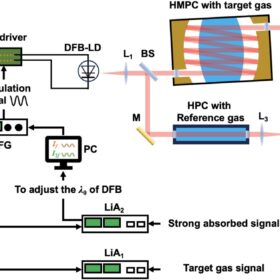
Hydrogen detection system for safety, quality control
Researchers in Japan have developed an optimized hydrogen gas measurement using TDLAS technique. It is reportedly able to achieve a detection range of hydrogen gas concentration of 0.01% to 100%. The group said that it can improve hydrogen safety and in turn, its adoption.
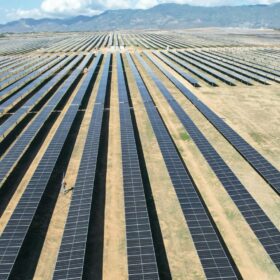
A turning point for Algerian solar
Algeria has long limited the use of solar to villages in the Sahara, but two large-scale tenders for 3 GW of generation capacity are expected to change that. By including a local content clause, the North African nation aims to build an industry around renewable energy.
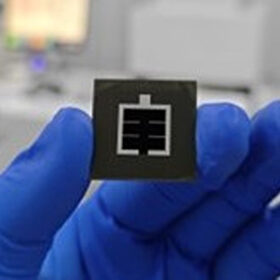
Perovskite-silicon tandem solar cell based on copper(I) thiocyanate achieves 31.46% efficiency
A Saudi-Chinese research team has fabricated a perovskite-silicon tandem solar cell without a hole transport layer (HTL) in the perovskite top cell. This innovative strategy, based on the co-deposition of copper(I) thiocyanate and perovskite in the top cell absorber, was intended at solving typical issues of HTLs in tandem devices.

India sets new record with 17.4 GW of solar in first nine months of 2024
India installed about 17.4 GW of solar capacity from January to September 2024. This included about 13.2 GW from utility-scale PV installations, 3.2 GW rooftop projects and 1 GW distributed offgrid PV capacity.

Freyr to acquire Trina Solar U.S. manufacturing assets
The battery maker reports that acquiring the module manufacturing assets is the first step in its plan to build out a vertically integrated domestic manufacturing footprint that will next include a 5 GW solar cell facility.

Solar stocks nosedive as Trump victory is secured
With a Republican White House, Senate, and the House of Representatives up for grabs, core solar industrial policy will possibly be repealed.
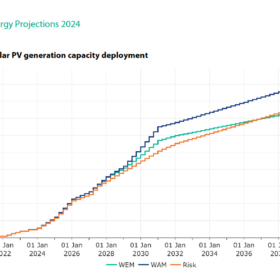
Ireland to miss 2030 solar targets by at least 2.9 GW, says SEAI
New data from the Sustainable Energy Authority of Ireland (SEAI) says there is no scenario in which Ireland will meet its 2030 solar deployment capacity of 8 GW. With existing measures in place, the reality would be more like 5 GW, the government-run group estimates.

Lower solar production drives up European electricity prices
AleaSoft Energy Forecasting found weekly average electricity prices in excess of €80 ($85.77)/MWh in most major European markets last week. Despite a drop in solar production across the week, France, Germany, Italy, Spain and Portugal all set new records for solar generation during a single day in November.
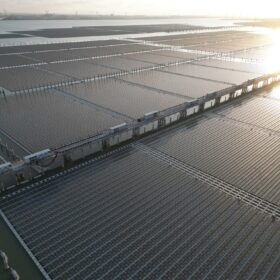
Hexa Renewables commissions world’s largest offshore floating solar plant
Hexa Renewables has completed the world’s largest offshore floating PV plant in Taiwan. The 440 MW solar array covers 347 hectares of government-leased surface area and can supply power to about 74,000 households.
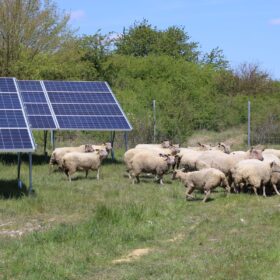
SolarPower Europe publishes guide for agrivoltaics
SolarPower Europe has released a handbook on agrivoltaics, detailing agrisolar archetypes, business cases, agricultural and environmental factors, and real-life project examples. It also urges European policymakers to boost support for agrisolar development.
