
Dracula Technologies relaunches production of organic photovoltaic modules in France
The Valence plant can produce 150 million square centimeters of active surface area of OPV modules using its inkjet printing technology, with the aim of quadrupling its capacity by 2026. Sensitive to natural and artificial light, Dracula’s modules operate indoors from any light source and are intended for use in IoT, industrial electronics and as battery replacements.

Depreciation of €222 million pushes Baywa’s result to zero
The Munich-based group generated significantly lower sales in the first half of the year. In addition, it had to make large write-downs, particularly in its renewable energy business.
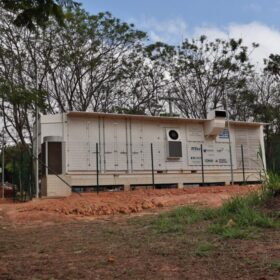
Brazil launches public consultation on battery capacity reserve auction
According to the draft of the auction rules published by the Ministry of Mines and Energy, the procurement exercise will be held in June 2025 for systems with a power output of at least 30 MW that can store energy for at least four hours a day. The draft says that the contracts will cover a period of 10 years, with operation starting in July 2029.

Greece adds 1.5 GW of new solar in January-September period
The Hellenic Association of Photovoltaic Companies (Helapco) says new figures reveal that Greece’s solar sector is growing faster than expected and could reach the nation’s 2030 target of 13.5 GW by 2026. By the end of the year, its cumulative PV capacity could exceed 9.2 GW.

Construction begins on 263 MW solar plant in Uzbekistan
China Datang has started building a $150 million, 263 MW solar plant in Uzbekistan for JSC Uzbekenergo.

Solitek unveils 435 W rooftop photovoltaic modules
Lithuania-based Solitek announced two new 435 W modules for integrated PV roofs featuring 22.04%-efficient cell technology. The Solitek’s Solid Solrif in-roof product line is paired with mounting systems supplied by Swiss-based Ernst Schweizer AG.
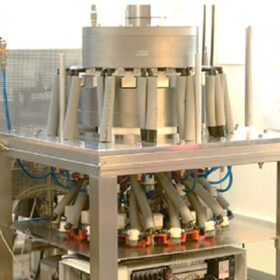
Magnetocaloric heat pump for residential applications
Researchers in Denmark built a magnetocaloric heat pump prototype for heating purposes in residential buildings. Although more work is needed to bring the system closer to commercial maturity, it can reportedly achieve a 36.9 % heating power improvement with measurement feedback control.
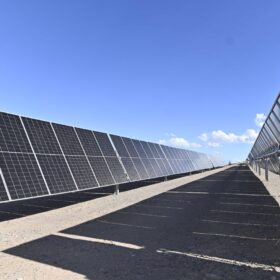
YPF Luz to begin working on 305 MW of solar in Argentina
YPF Luz says it is ready to start building a 305 MW solar project in Mendoza, Argentina, with an initial phase of 200 MW.

Akuo, Dos Grados complete 307 MW of solar projects in Portugal
Akuo has completed a 181 MW solar plant in Portugal, while Dos Grados Capital has brought a 126.5 MW plant online.

Power-generating breakwaters for floating photovoltaics
Scientists from Singapore have designed new floating breakwaters integrating wave energy converters that can be used to reduce the impact of waves on offshore PV systems. Their analysis showed that the wave energy systems can achieve the highest additional power output when the wavelength is shorter.
