Monitoring system for vehicle-integrated photovoltaics
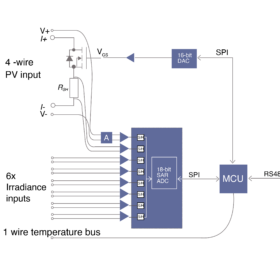
Researchers in Slovenia have built a monitoring system for vehicle-integrated photovoltaics consisting of an IV curve scanner that uses a MOSFET as a voltage-controlled electronic load. The system also utilizes an 18-bit analog-to-digital converter and a microchip microcontroller.
India adds 14.9 GW of solar in H1
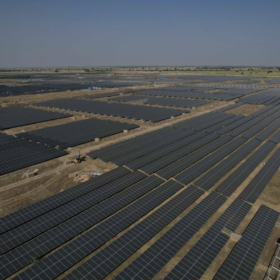
India added 14.9 GW of new solar capacity in the six months ending June, breaking all previous half-yearly and annual PV installation records.
Heliostat field-integrated PVT system supported by organic PCM
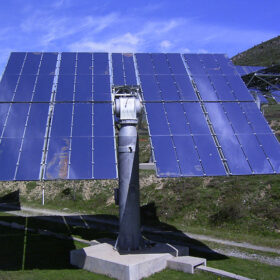
Scientists have used stearic acid and a combination of stearic acid and carbon black to increase thermal conductivity in a photovoltaic-thermal system linked to a heliostat field concentrator. From a temperature of 30 C at the inlet, they were able to heat the water to up to 59 C.

Pexapark says European developers signed 24 PPAs for 1.19 GW in July
Swiss consulting firm Pexapark says European developers have signed 24 power purchase agreements (PPAs) totaling 1,196 MW in July, with a 27% month-on-month increase in capacity, led by solar deals such as Europe’s largest decentralized solar PPA in France.

Vena Energy moves ahead with 550 MW of solar in the Philippines
Singapore’s Vena Energy and MGen Renewable Energy, the renewables unit of Manila-based Meralco PowerGen Corp., have signed an investment agreement for 550 MW of solar in the Philippines. Construction is due to start later this year.

Israeli developer secures €110 million for solar plants in Romania
Nofar Energy has obtained €110 million ($122.5 million) in financing from the European Bank for Reconstruction and Development (EBRD) and Raiffeisen Bank International to build two solar projects in Romania with a combined capacity of 300 MW.

ABB delivers automation solutions for 10 GW of renewables in India
ABB’s programmable logic controller-based automation solutions are now catering to more than 10 GW of renewable energy plants in India, including solar, wind and battery energy storage systems.

Norway inaugurates Europe’s first LFP gigafactory
Morrow Batteries has opened Europe’s first lithium iron phosphate (LFP) gigafactory in Arendal, Norway, with an annual capacity of 1 GWh.
Australian state launches plan to install 7.6 GW of solar by 2035
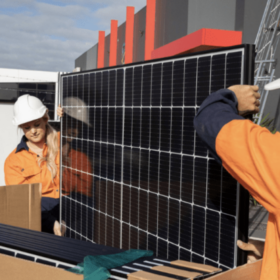
The authorities in the Australian state of Victoria have launched a plan to add at least 6.3 GW of rooftop solar, 1.2 GW of large distributed solar up to 30 MW, and 3 GW of utility-scale solar within the next decade.
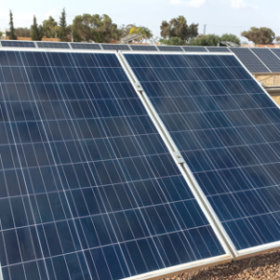
New research finds solar module anti-reflective coatings may reduce LCOE by over 2%
Researchers in Morocco have examined the effects of an anti-reflective coating on solar panel performance under desert conditions and have found that it enhanced both the annual performance ratio and the energy yield by 2% and 5.5%, respectively. They have also found it to be durable and able to withstand dry cleaning methods under accelerated testing.
