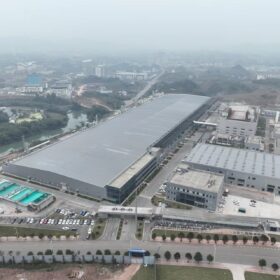
Sunova Solar announces 9 GW cell factory in China
Sunova Solar’s new cell manufacturing facility produces 182 mm, 199 mm and 210 mm TOPCon cells. At full capacity, the facility is expected to produce approximately 36,000 high-efficiency modules per day.
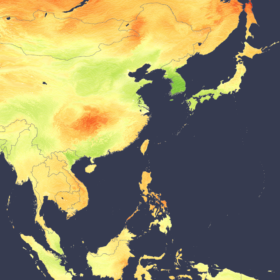
Solar producers across Northern Asia miss out on El Nino generation bump
In a new weekly update for pv magazine, Solcast, a DNV company, reports that solar producers in several provinces of Central China benefited from clearer than normal conditions in December and particularly February, bringing up the average to 20% more than expected. Furthermore, Solcast analysis reveals that, during the same period, Korea and Southern Japan saw consistently cloudier conditions than in normal years, decreasing irradiance and solar potential across the region.

Photovoltaics for refrigerated warehouses
Scientists in China have analyzed the performance of PV-driven refrigeration warehouses and have found they can ensure stable operation thanks to a refrigeration coefficient of performance of up to 2.66.

Indian government approves $9 billion rebate scheme for residential PV
India’s residential rooftop solar scheme provides central financial assistance (CFA) equating to 60% of system costs for 2 kW systems and 40% of the additional costs for systems between 2 kW and 3 kW of capacity. The CFA will be capped at 3 kW.

REC launches 430 W heterojunction solar module with 22.2% efficiency
REC has developed a new series of residential heterojunction solar panels with efficiencies ranging from 20.6% to 22.2% and an operating temperature coefficient of -0.24% per degree Celsius.
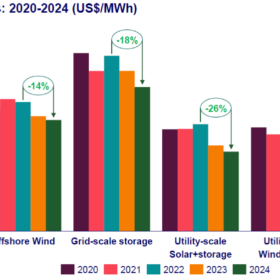
Utility-scale PV cheapest power source in Asia Pacific, says WoodMac
Wood Mackenzie says the levelized cost of electricity (LCOE) in the Asia-Pacific region hit an all-time low in 2023, as utility-scale PV beat coal to become the cheapest power source. It predicts a further drop in costs for new-build solar projects, driven by falling module prices and oversupply from China.
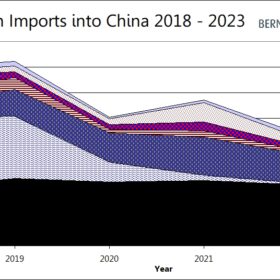
Polysilicon shipments into China fall to lowest level since 2011
Bernreuter Research says the volume of polysilicon shipments into China dropped 28.5% year on year in 2023 to the lowest level since 2011. It predicts that imports could fall by another 40% this year.
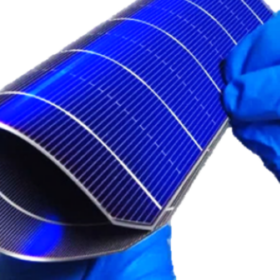
Longi develops flexible heterojunction solar cell with 26.06% efficiency
The Chinese module manufacturer led an international research team seeking silicon material savings and efficiency gains in the development of heterojunction PV devices. The cell achieved a certified power conversion efficiency of 26.06% with a thickness of 57 μm, with Germany’s Institute for Solar Energy Research confirming the result.

India launches 1.2 GW wind-solar hybrid tender
Solar Energy Corp. of India (SECI) has started accepting bids to build 1.2 GW of wind-solar hybrid power projects on a build-own-operate basis anywhere in India. The projects must be connected to the interstate transmission system (ISTS). Bidding closes on March 29.

The Hydrogen Stream: First hydrogen coach ready for mass-production
GCK Mobility has secured French government approval for the first homologation of a hydrogen-retrofitted coach for series production, while Forvia and Air Liquide have agreed with FAW Jiefang to equip heavy-duty trucks with liquid hydrogen storage systems in China.
