
Weekend Read. COP: A solar flop?
Tripling clean energy generation capacity to 11 TW by 2030 was a leading pledge from the United Nations’ (UN) climate change conference in Dubai. With few details about infrastructure and energy storage and no clear PV targets, however, it is hard to judge the effectiveness of the 28th global Conference of the Parties (COP) meeting. Angela Skujins considers possible impacts for the solar industry.
The Hydrogen Stream: US funding 16 geologic hydrogen exploration projects
The US Department of Energy (DoE) has announced plans to invest $20 million in 16 projects across eight states to accelerate the exploration of geologic hydrogen.
Methylammonium-free inverted perovskite solar cell achieves 23.17% efficiency
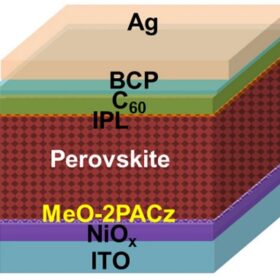
Scientists in Japan have fabricated an inverted pervoskite cell with a new bond/charge regulated defect passivation technique consisting of introducing bifunctional molecules onto the perovskite absorber. The device exhibited a low open circuit voltage deficit and remarkable stability.
Indian state agrees to procure 1 GW of solar from multiple PV projects
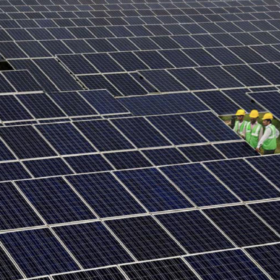
Uttar Pradesh Power Corp. Ltd. (UPPCL) has agreed to procure 1 GW of solar capacity for the Indian state of Uttar Pradesh from projects connected to the nation’s interstate transmission system (ISTS). Solar Energy Corp. of India (SECI) will serve as the intermediary trader.
Blended finance key to scaling small-scale solar projects
The Institute for Energy Economics and Financial Analysis (IEEFA) and auctusESG say in a new report that scaling up financing for renewable energy assets such as solar minigrids depends on the combination of private and public capital in a risk-adjusted return structure.
Larsen & Toubro wins 75 MW floating solar project
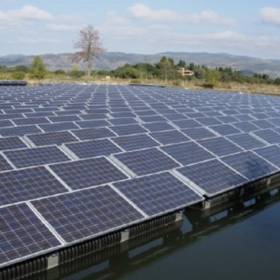
Larsen & Toubro, an Indian engineering, procurement, and construction (EPC) specialist, has secured a contract to build a 75 MW floating solar plant on a dam in India.

The effect of height, tilt angle, and temperatures on floating PV performance
A research team studied factors influencing floating PV efficiency and energy production and determined the optimal tilt and height to achieve lower cell temperatures compared with land-based PV.
Philippines proposes register for PV system installers
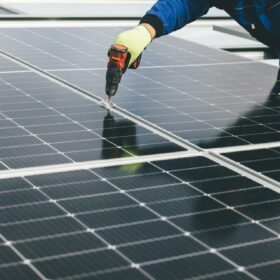
The Philippines’ Department of Energy (DOE) is moving ahead with plans to require solar system installers to officially register with it. The DOE says that only registered installers will be recommended to government entities seeking PV installation services.
Indian oil producer unveils alkaline electrolyzer
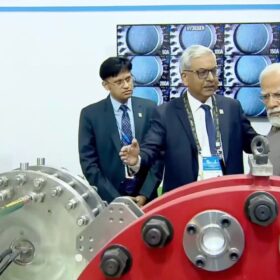
Bharat Petroleum Corp. Ltd. (BPCL) has developed an alkaline electrolyzer in collaboration with India’s Bhabha Atomic Research Centre (BARC).
Coupling ground-source heat pumps with heat storage, borehole heat exchangers
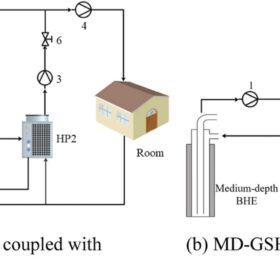
Scientists from China have developed a novel optimization method for medium-depth ground source heat pumps, using an improved chaos particle swarm optimization. They coupled it with either a heat storage tank or a shallow borehole heat exchanger and found that both system typologies increase the heat pump’s coefficient of performance.
