
Guyana purchases solar systems for 21 villages
Guyana has approved a GYD 885 million ($4.2 million) investment to retrofit solar systems across 21 Amerindian villages, expanding the country’s off-grid solar rollout in four administrative regions.
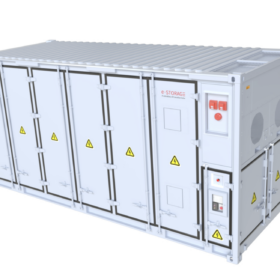
A critical moment for Brazilian energy storage
A national procurement round for energy storage systems, planned in the second half of the year, is at risk of lengthy delay just as the grid operator is being forced to curtail large volumes of excess clean electricity.

Honduras to launch 1.5 GW tender, including 975 MW of renewable energy with storage
The National Electric Energy Company has submitted rules for the international public bidding process for the purchase of 1.5 GW of capacity and energy. The tender will consist of 65% renewable energy with storage and 35% non-renewable energy. The bidding process has also been presented to a forum of Chinese investors.
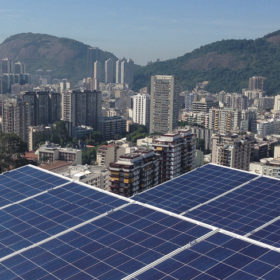
Brazilian government to propose full opening of energy market by 2028 and end of discounts for renewables
The proposed reform of the electricity sector includes the creation of the supplier of last resort, possible flexibility for consumers without contracts and the end of TUST and TUSD discounts for renewable power plants. The plan also imposes a minimum load of 30 MW for self-production by equalization and determines changes in the cost sharing of the sector.

Chinese solar supply issues test Brazilian market amid shifting demand
In a new special, pv magazine Brazil reports on how rising Chinese demand, price volatility and the global tech race are reshaping Brazil’s solar market, with major manufacturers weighing in on supply shifts, pricing and the outlook for storage.
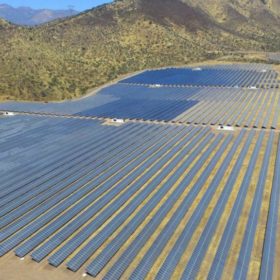
Brazil to add 19.2 GW of solar capacity in 2025
The additions represent marginal growth compared to 2024, according to SolarPower Europe. Last year, the country ranked second in new installations, behind only India (30.7 GW), the United States (50 GW) and China (329 GW). In terms of cumulative capacity through December 2024, the country ranked sixth, with 66.7 GW.

Spain’s Smartbox presents 100% autonomous cleaning robot
It comes with two plug-and-play batteries, each with 4.5 hours of battery life, and is capable of cleaning up to 4,000 panels in 10 hours.
PV module demand in Brazil’s centralized generation market declining after reaching 5.1 GW in 2024
The volume of imported modules was 18% lower than in 2023. After growth in 2024 compared to 2023, installations of large solar plants are expected to face a decline in 2025, with the combination of energy prices close to the floor and worsening curtailment potentially postponing new investments.

Chile can achieve emission-free electricity system by 2035 with technical and economic support
A study developed by the Chilean Association of Renewable Energies and Storage (ACERA AG) and the Institute of Complex Engineering Systems (ISCI) concludes that it is technically feasible to operate the National Electric System without fossil fuel generation, with investments in renewable energy storage, and flexible demand.

Colombia approaches 2 GW solar capacity milestone
Colombia is approaching 2 GW of cumulative installed PV capacity, with 1.34 GW currently operational and an additional 700 MW in testing, according to the country’s grid operator.
