
Distributed generation surpasses 37 GW in Brazil amid concerns over curtailment
This type of generation could become the country’s second largest source of generation by 2029, according to the National Electric System Operator (ONS). Distributors should take a more active role in managing DG systems, which have been associated with centralized generation curtailment events, according to the ONS.

Chile reels from impact of massive power outage
On February 25, more than 90% of the population was left without electricity. President Gabriel Boric described the event as “outrageous,” while electrical trade associations have requested greater supervision and improvements in the infrastructure to avoid future incidents.
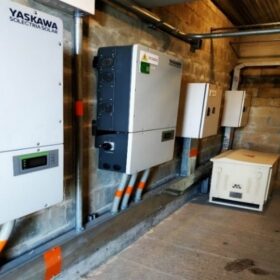
New technique to predict solar inverter temperature
An international research team has developed a novel approach for predicting inverter temperature through symbolic regression based on particle swarm optimization.
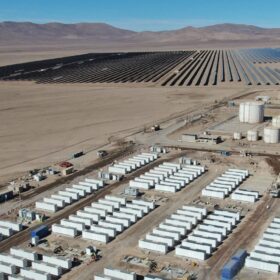
Brazil installed 269 MWh of energy storage in 2024
Consultancy Greener has estimated the state of Pará offers the most potential for battery rollout because of its high energy tariff. A report issued by the consultant also highlighted the big savings agribusiness could make by using batteries instead of diesel.

Challenges of dismantling abandoned wind and solar farms
Researchers studying decommissioned wind and solar farms in Italy, Spain, Venezuela, and Argentina have found that weak regulations risk leaving more abandoned assets in their wake.
Sinovoltaics updates map of North American solar supply chain
The North American manufacturing hub has added several new producers across the PV module supply chain but analysts see continued cell, wafer, and polysilicon capacity constraints. The report is based on announcements of capacities at sites in the region producing PV modules, cells, wafers, ingots, polysilicon, and metallurgical-grade silicon.

Ecuador could host floating PV facilities at 11 hydropower plants
An international team has researched the potential to deploy floating photovoltaics at hydroelectric stations in Ecuador, finding 11 out of 70 sites that could host at least 15 MW up to 200 MW.
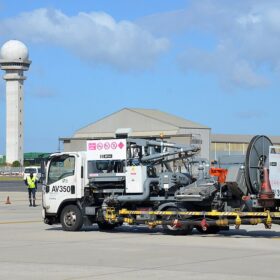
Airports Company South Africa issues tender for three PV plants totaling 9.5 MW
The tender covers the design, supply, installation, commissioning and maintenance of three proposed projects to be based at Tambo International Airport, King Shaka International Airport, and Cape Town International Airport. Closing dates for submission is March 17.
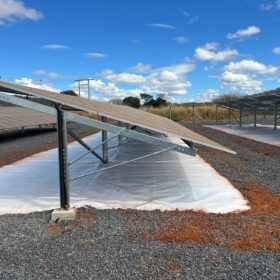
Brazilian plastics manufacturer offers reflective membrane for bifacial PV plants
Azul Pack has developed a new reflective membrane to increase albedo and energy yield in photovoltaic plants with bifacial modules. In a fixed structure plant located in Minas Gerais, the technology reportedly resulted in a 7% increase in energy at the inverter output.
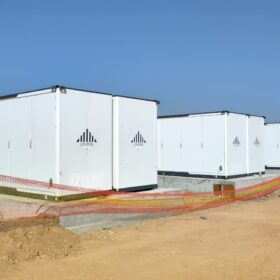
Argentina launches 500 MW storage auction
The Argentinean authorities plan to install the new storage capacity in critical nodes of the metropolitan area of Buenos Aires, with an estimated investment of $500 million and an execution period of between 12 and 18 months.
