
Solinteg releases new hybrid inverter series
The M2HT series has an output range of 75–125 kW and is the company’s first product in the 125 kW power class.

GCL Technology forms $287 million entity to buy stake in Chinese rival
GCL Technology Holdings has set up a CNY 2.06 billion ($287 million) partnership to acquire a 42.5% stake in Inner Mongolia Xinyuan Silicon Material Technology, in a move that may point to emerging consolidation in China’s polysilicon sector.

DMEGC launches framed solar module weighing 7.5 kg/m2
In response to the growing demand for solutions for low load-bearing roofs, Chinese manufacturer DMEGC is presenting an IEC-certified lightweight 460 W module at France’s largest PV trade show – EnerGaïa.
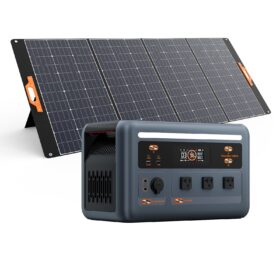
Oscal launches 1,024 Wh portable storage system
The Chinese company said its Power Max 1800 SE has a rated power of 1.8 kW and a surge power of 2.4 kW. It weighs 15.5 kg and measures 39 cm x 23 cm x 25.4 cm.
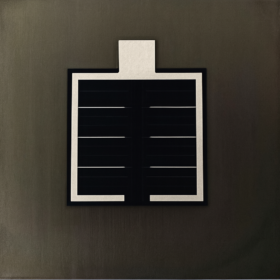
Perovskite-silicon tandem solar cell with steric complementary design achieves 32.3% efficiency
Researchers in China developed a monolithic perovskite-silicon tandem solar cell using a steric-complementary interface design, achieving a certified efficiency of 32.12% and enhanced long-term stability. This strategy optimizes molecular fit in the perovskite lattice, improving both charge transport and device longevity.
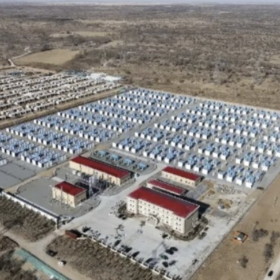
China powers up nation’s largest standalone battery storage project
A 500 MW/2,000 MWh lithium iron phosphate battery energy storage system has entered commercial operation in Tongliao, Inner Mongolia, after five months of construction, with total investment of CNY 1.5 billion ($212.2 million) and designed for peak shaving and renewable integration.

pv magazine Awards 2025 winners revealed
Excellence was on display across all eight categories in the pv magazine Awards 2025 with plenty of innovation in both established and new market segments. From world-firsts to second-life solutions, this year’s winners brought cutting edge solutions to challenges facing solar and storage. The time has come to reveal the winners and highly commended finalists…
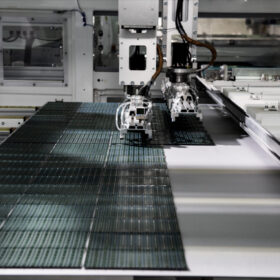
Chinese PV Industry Brief: Aiko, Skyworth PV plan 5 GW back-contact solar module factory in Guangxi
The two companies will invest approximately CNY 2 billion ($282.8 million) in the new facility, which will host two production lines, each with a capacity of 2.5 GW. The project has already passed environmental review.

Chinese researchers build 31.71%-efficient perovskite-silicon tandem solar cell based on new interfacial engineering
The two-terminal perovskite–silicon tandem solar cell was fabricated through a chemical polishing method that selectively removes residual lead(II)iodide from the perorvskite film in the top cell. This targeted interfacial engineering improved uniformity and stability, enabling a certified 31.71% efficiency and enhanced long-term performance.

How to build giant solar plants in mountainous areas
Chinese researchers have proposed a new methodology for designing utility-scale solar power projects in mountainous regions. They simulated a 386.4 MW solar farm near Pu’er, a city in southern China located 1,037 meters above sea level.
