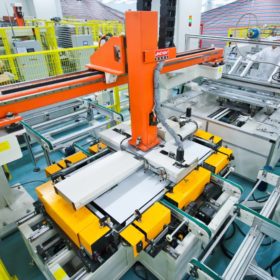
Chinese PV Industry Brief: Two major deals for PV production equipment
JSG has sold several ingot furnaces to Shuangliang Eco-Energy and Jinchen Machinery will provide Yingli with production equipment totaling 3.5 GW.
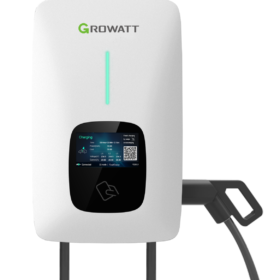
Growatt unveils EV chargers for residential and commercial applications
The charging stations are available as both AC and DC chargers. They are compatible with all branded electric vehicles and PV modules.
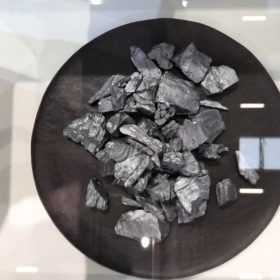
Chinese PV Industry Brief: TBEA wants to set up 400,000 MT metal silicon production
TBEA unveiled a plan to build a 400,000 MT metal silicon factory in Baotou City, in the Inner Mongolia province. Furthermore, EnergyTrend reported polysilicon prices increased slightly this week.
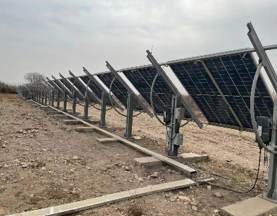
210mm wafer achieves highest energy yield, finds Trina Solar
Trina Solar has found that its Vertex modules, based on the 210mm wafer, achieve an energy yield up to 1.6% higher than rival products based on the smaller 182mm wafer format. The company conducted outdoor testing at two separate sites with varying climates, finding that products based on the larger format have a particular advantage in low-irradiance environments.
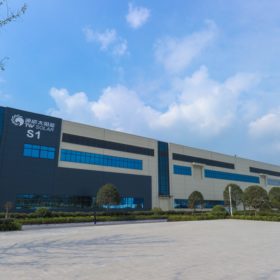
Chinese PV Industry Brief: Daqo wiped debts as poly price continued to rise
The worldwide solar boom is proving so profitable the polysilicon manufacturer is even thinking of turning to PV panels to power its manufacturing operations, rather than cheap coal.
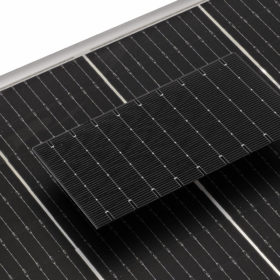
Jinko and Tongwei strengthen supply chain tie-up
The former has committed to invest more than $70 million into a 100,000-ton polysilicon production line in Leshan that will then supply it with 30,000 tons of its output annually.
GCL-Poly says staff at state company gave misleading responses to investigation into problematic pre-payment
“Junior” figures at state-owned Sinomec Refinery & Chemical Corp told investigators from then-GCL auditor Deloitte that most of an advance payment made for a granular silicon plant had been passed on, in a bid to dissuade GCL from halting the EPC contract, the solar manufacturer said on Friday.
Shunfeng misses deadline to settle 2016 corporate bond
The company is planning another sell-off of solar projects, with two solar farms with a total generation capacity of 93 MW earmarked for divestment to state-owned China National Nuclear Power – provided the sites can come up with their rent arrears.
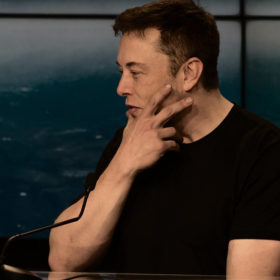
Tesla places battery grade lithium hydroxide order with Ganfeng
The deal with the high-profile electric car company, announced today by Ganfeng, comes three days after Tesla reportedly placed an order with CATL for 45 GWh of lithium iron phosphate batteries.
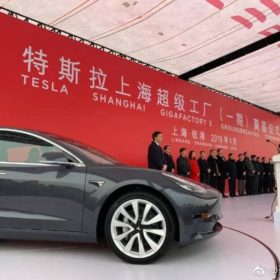
Tesla orders 45 GWh of EV batteries from CATL
Reports calculated that the single order would be enough to support production of 800,000 vehicles.
