
Perovskite solar cell based on Mxene achieves record-breaking efficiency of 25.75%
A research team in Spain has built what it claims to be the world’s most efficient perovskite solar cell using MXenes or any other type of 2D-materials. The device relies on a Mxene interlayer that suppresses non-radiative recombination and improved charge extraction at the interface between the perovskite absorber and the electron transport layer.

When solar meets next-gen nuclear
Scientists in China have proposed a novel scheduling framework for microgrids based on hybrid PV and a small modular nuclear reactors. The framework uses multi-objective distributionally robust optimization with a real-time reinforcement learning mechanism and is reportedly able to reduce operational costs by 18.7%.
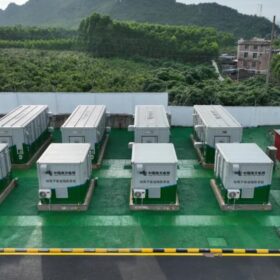
Massive 20 GWh sodium-ion battery manufacturing plant announced in China
After last year’s slowdown, investment in China’s sodium-ion battery sector is rebounding in 2025, and one of the biggest projects yet has now entered the development pipeline.

Wind-PV-powered heat pump for low-energy residential buildings
Scientists in China have developed an optimized energy management strategy for a wind-PV hybrid heat pump system that uses both thermal and electric energy storage. Using different seasonal interaction management strategies, they simulated four operational cases.

Chinese PV Industry Brief: Cybrid Technologies ships first optical conversion films for perovskite tandem solar modules
Cybrid Technologies announced the first mass delivery of optical conversion films for perovskite tandem solar modules, marking what it described as the world’s first commercial application of this technology.
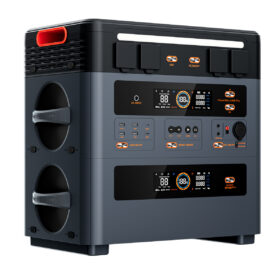
Oscal releases 2 kWh battery for home, off-grid, on-grid use
The Chinese company said its 2,016 Wh portable LiFePO₄ energy-storage system is expandable to 22,176 Wh with additional battery modules. It delivers 2,400 W output, offers 16 ports, app-based control, and includes built-in audio and lighting features for home, travel, and off-grid use.

Longi reveals details of world’s most efficient silicon solar cell
In a new scientific paper, the Chinese solar manufacturer explained that the 27.81%-efficient hybrid interdigitated back-contact cell it unveiled in April is based on passivated tunneling contacts and dielectric passivation layers, while also incorporating both n-type and p-type contacts.
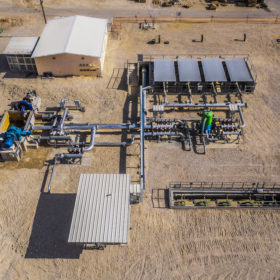
Cash flow analysis shows adiabatic compressed air storage is viable for 10–100 h applications
Scientists in the United Kingdom have compiled a new database of adiabatic compressed air energy storage projects. Using this data, they were able to determine the experience rate and identify the conditions under which the technology would be economically viable. According to their findings, costs have declined at a 15% learning rate since 2013.

Chinese scientists build 18%-efficient organic solar cells with enhanced stability
Chinese researchers have demonstrated organic solar cells with novel encapsulation and a protective interfacial layer for enhanced stability and efficiency. The best performing cell based on the new approach retained 94% of its initial power conversion efficiency after standards-based damp heat testing for 1,032 hours damp heat and across 200 thermal cycles.
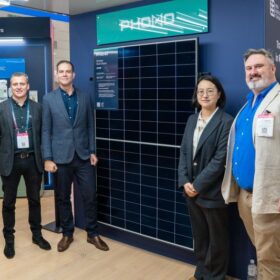
Phono launches 475 W back-contact solar panel
Chinese manufacturer Phono has launched a new bifacial solar panel in the Australian market featuring an output of 475 W and a power conversion efficiency of 23.27%.
