
Poland draft grid law could slow solar and storage investment, warns industry
The Polish Photovoltaic and Energy Storage Association (PSFiME) says proposed changes to Poland’s energy law could impose high upfront costs on developers, raising market entry barriers and unfairly favouring large, well-capitalized players.
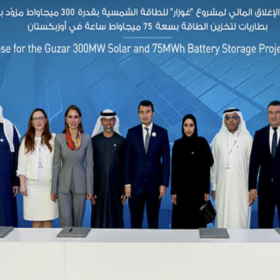
Masdar reaches financial close on 300 MW Uzbek solar project
The Abu Dhabi-based developer has secured $225 million ($193.6 million) for the development of a 300 MW solar plant linked to 75 MWh of energy storage in Uzbekistan, as part of its commitment to deploy 2 GW of renewables in the country.

Czechia deploys 696 MW of solar in 2025
Czechia’s solar market slowed in 2025, largely due to a downturn in residential deployments. The country’s solar association says that while it remains to be seen if the rate of installations will pick up this year, significant growth is expected in the storage market.

Masdar join forces with Montenegrin utility
Abu Dhabi-based developer Masdar and Montenegro’s state-owned power company EPCG have entered into a framework agreement that could see a joint venture company belonging to the two parties develop, build, own and operate large-scale solar projects in the country.

Romania installs 2.2 GW of solar in 2025
Romania enjoyed another record year for solar deployment in 2025, taking cumulative capacity past the 7 GW threshold. Utility-scale installations almost doubled year-on-year, buoyed by a favourable regulatory framework.

Croatia deploys 417 MW of solar in 2025
Croatia’s solar capacity is on course to exceed its wind energy capacity for the first time in early 2026. With utility-scale projects facing regulatory deadlock and the end of net-metering for the residential market, growth is being led by commercial and industrial customers.

Poland’s massive new airport project to host utility-scale solar-plus-storage project
Poland’s Central Transport Port company tendered 20 MW of solar PV plus 50 MW of battery storage capacity with a working time of two hours. The project’s capacities could be expanded in the future, when the Port Polska airport will be fully operational.

Serbia tenders design, feasibility study of solar project
Serbian utility Elektroprivreda Srbije (EPS) is seeking bids for a feasibility study and design of a solar plant on an existing thermal power plant’s ash disposal site, with applications due by Jan. 23.

ML System unveils solar facade panels, roof-integrated PV tiles
The Poland-based module manufacturer has developed Photonwall, a building integrated solution for ventilated façades. It also offers Photonroof, a ceramic PV roof tile solution. Both BIPV products are available in colors and finishes that match the aesthetics of modern and historic buildings.
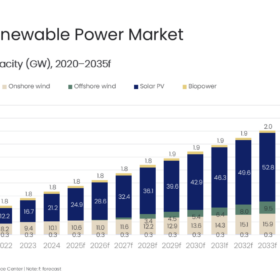
Poland projected to reach 59.1 GW of solar by 2035
London-based consultancy GlobalData says Poland could add between 3 GW and 4 GW of solar annually through to the middle of the next decade.
