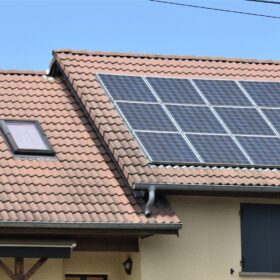
Uzbekistan expands solar home subsidy uptake to over 35,000 households
More than 35,000 households in Uzbekistan received state subsidies for exporting surplus electricity from rooftop solar systems between January and September, says the State Tax Committee, as participation in the Solar Home program accelerates nationwide.

Crystalline silicon vs. thin film at high latitudes
A four-year analysis conducted at a testing field in eastern Poland has shown that crystalline solar panels offer a stronger performance than thin-film panels at high latitudes. The tests revealed pronounced seasonal variability across all technologies, with thin-film modules showing markedly lower capacity factors than crystalline silicon, particularly in winter.
The Hydrogen Stream: Germany audit warns of missed H2 goals
Germany’s Federal Court of Audit (Bundesrechnungshof) says the nation’s hydrogen strategy is falling short despite heavy subsidies, while Pulsenics and Endua have launched the first commercial AI-based monitoring system to improve electrolyzer performance under fluctuating renewable power conditions.

Armenia hits 1 GW solar milestone
Armenia’s installed solar capacity has reached 1 GW, and the government is likely to replace its subsidy program for standalone solar projects with one focused on hybrid and storage systems, according to the nation’s infrastructure ministry.

EBRD invests in 1 GW of solar, 1.3 GWh of storage in Uzbekistan
The European Bank for Reconstruction and Development (EBRD) is providing $142 million in financing to two ACWA Power-led solar-plus-storage projects in central Uzbekistan.

PV-driven desalination system for brackish water
Algerian researchers have built a single-stage solar and battery desalination system for brackish water that uses a hybrid spotted hyena optimizer and maximum power point tracking (MPPT) algorithm to improve efficiency. Simulations and real-time tests showed high performance, steady water output, and low salinity under changing solar conditions.
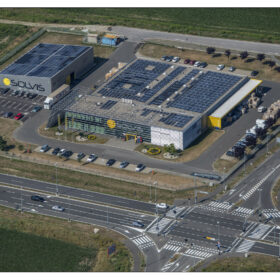
Croatia’s regulatory deadlock is strangling large-scale solar
Regulatory inaction on grid fees has stalled 3.5 GW of large-scale renewables in Croatia, mostly solar, with developers such as Solvis citing a lack of stable grid-connection rules as a barrier to planning and investment.

Romania drafts cybersecurity rules for PV, cogeneration up to 1 MW
Romania plans to amend its energy law to require the National Cybersecurity Directorate (DNSC) to define technical standards for PV and cogeneration systems up to 1 MW, aimed at preventing data breaches and safeguarding grid operations.
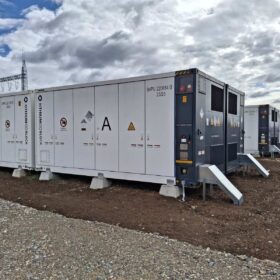
Renalfa switches on 260 MWh battery storage system in Bulgaria
The battery energy storage system is the first phase of a 315 MW/760 MWh system that is being developed alongside 238 MW of solar under Bulgaria’s largest hybrid power project to date, due for completion next year.
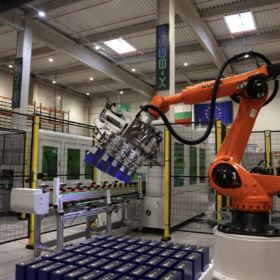
IPS inaugurates Bulgaria’s first battery storage gigafactory
International Power Supply (IPS) has begun production at its 3 GWh battery factory near Sofia, with plans to expand capacity to 5 GWh by the second quarter of 2026.
