
The Hydrogen Stream: Dutch electrolyzer merger forms Alquion
Battolyser Systems and VDL Hydrogen Systems have merged to form Alquion, while Ming Yang Smart Energy Group plans to invest more than $10 billion in hydrogen and renewable energy projects in Ethiopia.

The effects of solar module elevation on ground-mounted PV
Scientists in Hungary found that ground-mounted PV modules at an intermediate elevation of 1.1 m achieve the highest efficiency and power output due to improved airflow and reduced cell temperature. Their study also estimated a levelized cost of electricity of $0.0843/kWh and 577.78 kg CO₂ mitigation over 25 years, while noting results are specific to concrete surfaces.
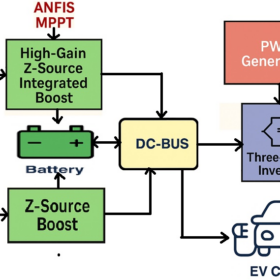
Novel MPPT technique for EV charging combined with PV, fuel cells
Scientists in India have designed a system that uses PV panels, a proton-exchange membrane fuel cell, battery storage, and a supercapacitor. It also relies on an adaptive neuro-fuzzy inference system-based MPPT that reportedly achieves an efficiency of 98.7%.

Photovoltaics for mango drying
Scientists have created a solar cabinet dryer for mango slices, with PV-powered forced convection. Placing mango slices of different thicknesses inside, they have measured the operation of their device against two reference methods and have found that thermal efficiency reached 30%.

Solar key to enable clean cooking in refugee camps
Scientists in Spain studied electricity demand data for the Kobe refugee camp in Ethiopia to optimize several minigrid scenarios, also integrating the use of electric pressure cookers. Their analysis showed that introduction of the cooker required an increase in PV capacity of up 68%.
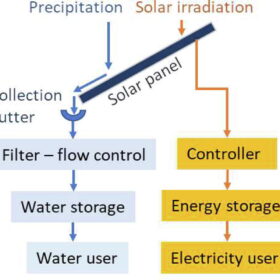
How to combine photovoltaics with rainwater harvesting
Scientists have developed a system that harvests rainwater running off PV panels for household use or hydrogen production. Their analysis showed that, in the southern Sahel, the system can meet both the energy and water requirements for electrolysis, with surplus rainwater covering up to 50% of a household’s daily water demand.
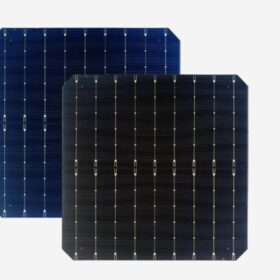
Japan’s Toyo begins production at 2 GW solar cell plant in Ethiopia
Toyo Co. has started production at its 2 GW solar cell facility in Ethiopia, with plans to deliver more than 80 MW of tunnel oxide passivated contact (TOPCon) cells by the end of April before scaling capacity to 4 GW.
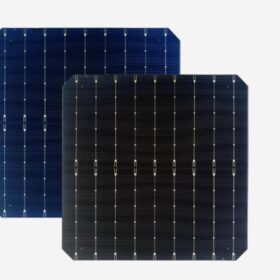
Japan’s Toyo plans 2 GW solar cell factory in Ethiopia
Tokyo-based Toyo Co. says it will invest $60 million in a new 2 GW solar cell factory in Ethiopia, to mostly serve the US market.
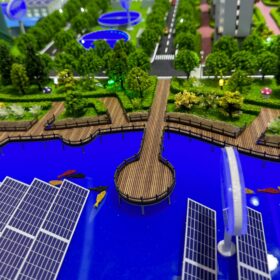
Optimizing bifacial solar panels for floating PV applications in tropical freshwater
New research from India shows how bifacial solar modules should be deployed to achieve strong performance in floating PV projects planned on tropical freshwater. Their experimental setup demonstrated that higher efficiency gains are achievable by gauging panel height, water depth, and tilt angle.

Desert-to-Power initiative seeking consultants for solar mapping
The Intergovernmental Authority on Development (IGAD) is seeking consultants to undertake a solar mapping exercise in seven of its members states: Djibouti, Ethiopia, Kenya, Somalia, Sudan, South Sudan, and Uganda. The deadline for expressions of interest is August 30.
