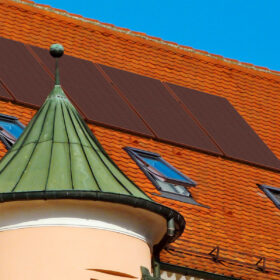
Sonnenkraft unveils 400 W TOPCon panel for terracotta red rooftops
Austrian manufacturer Sonnenkraft has developed a terracotta glass-glass module that aesthetically blends in with tiled roofs. It has an efficiency rating of 20.02%.
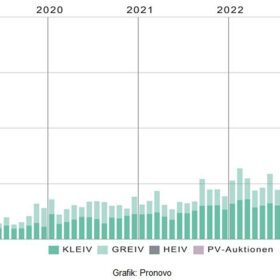
Switzerland records 600 MW of subsidized PV projects in Q1
The Swiss Federal Office of Energy says the number of PV installations registered for subsidies with Pronovo, a Swiss government agency, rose 81% year on year in the first three months of 2024.
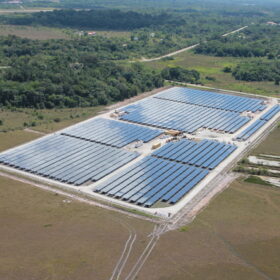
France allocates 49.8 MW in PV tender for non-interconnected areas
CRE, the French energy regulator, initially planned to allocate 99 MW in its PV tender for non-interconnected areas, but ultimately allocated 49.8 MW.
Italy bans PV from agricultural land
The Italian government has issued a new decree to completely ban solar from agricultural land. The new provisions will not apply to projects currently undergoing the approval process.
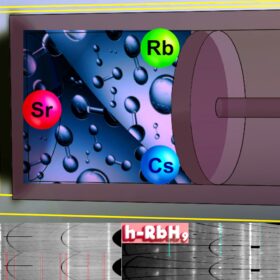
Researchers propose use of cesium, rubidium for hydrogen batteries
A study led by Russia’s Skoltech and China’s HPSTAR suggests that rubidium and cesium additives could improve the efficiency of hydrogen batteries. Researcher Dmitrii Semenok tells pv magazine that “it is a question of changing the approach to the search for promising hydrogen storage materials.”
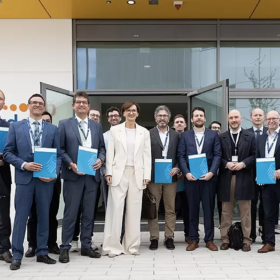
German initiative to develop scalable sodium-ion batteries
A collaborative project led by German battery supplier Varta aims to develop industrial-scale sodium-ion battery technology. The final product of the three-year, €7.5 million ($8.08 million) project will be a small series of round cells for electric vehicles and stationary storage systems.
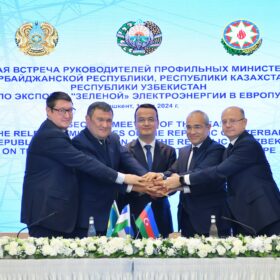
Azerbaijan, Kazakhstan, Uzbekistan plan energy interconnection
Ministers from Kazakhstan, Azerbaijan and Uzbekistan have agreed to connect their energy systems. They will lay an energy cable along the bottom of the Caspian Sea to facilitate the sale of green energy to Europe.

European Consortium seeks to streamline agrivoltaics design
A European consortium including Germany’s Fraunhofer ISE is researching suitable crop and PV system combinations, conducting tests under Nordic conditions, and developing software to expedite adoption.
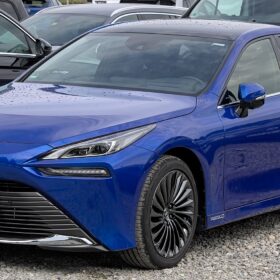
Low platinum fuel cells for hydrogen vehicles
New research from Sweden suggests that low platinum fuel cells for hydrogen vehicles, when scaled up for the same number of cells, may achieve similar or higher efficiencies compared to commercial fuel cells. Their modeling is expected to act as a bridge between material science research and vehicle implementation.
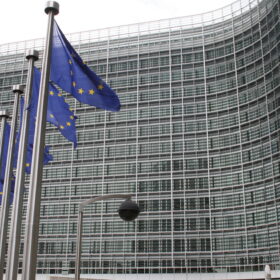
The Hydrogen Stream: EU hydrogen tender ends with bids below €0.50/kg
The European Commission has selected the winners of European Hydrogen Bank’s first auction, with bids coming in below €0.50 ($0.54)/kg, while Chile and Namibia have revealed new hydrogen plans.
