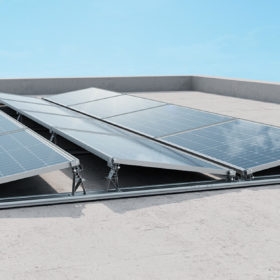
Flat-roof mounting system for modules with lengths of 1,500 to 2,000mm
Designed by German provider IBC Solar, the mounting structure can accommodate modules with lengths from 1,500 to 2,100mm and widths from 980 to 1,150mm. It comes with floor rails with pre-mounted construction protection mats and integrated cable ducts for up to 28 6mm² cables.
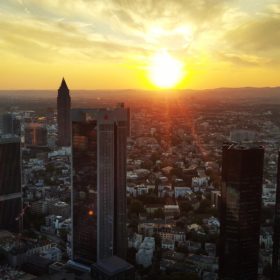
Germany installed another 400 MW of PV in July
In the first seven months of the year, the country deployed 3.2 GW of PV, which compares to 2.8 GW a year earlier.
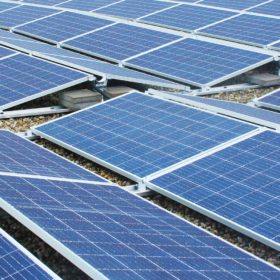
Serbia introduces net metering, rebate scheme for rooftop PV
The rebates will cover up to 50% of the costs for installing and deploying a PV system and are intended at supporting homeowners and businesses take advantage of the recently introduced net metering regime.
Competitive and sustainable: The future of back contact technology
In this pv magazine Webinar we’ll examine the latest developments in back-contact manufacturing, and the materials that go into these modules. Viewers will see why the numbers are beginning to stack up for back-contact, in comparison to multi-busbar and other conventional module technologies. We’ll also hear why the materials and processes used in back-contact manufacturing, when chosen and monitored properly of course, can lead to big improvements on the sustainability side.

Accelerated growth for French solar market, 1.36 GW of new PV systems deployed in H1
The French solar market is currently being driven by the utility-scale segment. In the first quarter of the year, newly deployed PV systems totaled 713 MW and in the second quarter their combined capacity reached 654 MW.
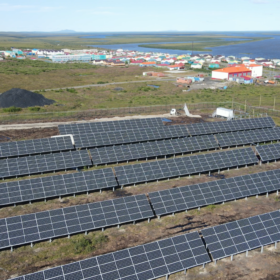
Solar+storage in the Russian Arctic
Hevel Energo Servis has developed a new solar+storage project under Russia’s energy service scheme to help independent power producers to sell power to municipalities with diesel power plants via a competitive bidding scheme.

Rebates and low-interest financing to support commercial PV in Montenegro
Montenegro’s Investment and Development Fund (IRF) is granting low-interest loans for commercial PV projects and the government agency Eco Fund is awarding non-refundable rebates of up to €25,000 per project, depending on the size.
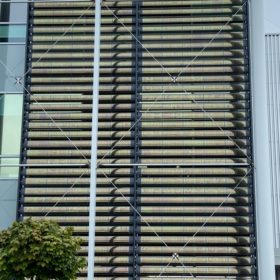
Photovoltaic sunshade based on perovskite solar cells
The phovoltaic sunshade was deployed on the facade of a factory owned by Polish aluminum system provider Aliplast. The movement of the PV blinds is regulated by a controlling system linked to a weather station installed on the roof.
German researchers want to reduce manufacturing costs for electrolysers by more than 25%
A number of Fraunhofer institutes in Germany want to make green hydrogen more cost-competitive and are working to identify the best and most economical processes for the production of electrolyzers. They intend to build a digital library of future-proof electrolyser manufacturing processes with which the investment costs and even the return on investment can be determined in advance depending on the planned production volume.

Spanish consortium wants to simplify hydrogen production through photoelectrocatalysis
Spanish energy giants Repsol and Enagás are planning to build an electrolyzer based on photoelectrocatalysis at an industrial complex owned by the oil company in Puertollano in 2024. The device receives direct solar radiation and with a photoactive material it generates the electrical charges that cause the separation of the water molecule into hydrogen and oxygen.
