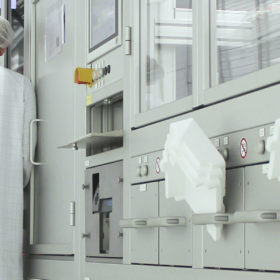
Finnish solar manufacturer finally starts production in Vilnius
Valoe completed the 15-month purchase process of a 60 MW cell production line from Solitek in the spring and installed interdigitated back-contact production equipment. It hopes to begin deliveries in the next quarter.
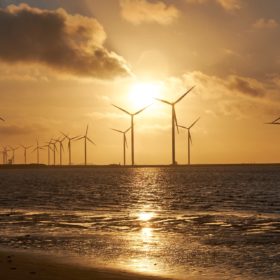
Offshore floating PV may reach maturity in 2030
According to a report from DNV GL, the North Sea may host around 100 MW of floating solar capacity by 2030, and 500 MW by 2035. The LCOE of offshore PV systems is currently estimated at around €354/MWh but in the future it should be close to that of ground-mounted solar parks.
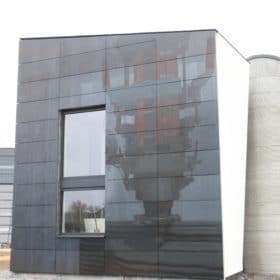
Solar facade for 3D-printed concrete house
Taiwan-based Heliartec has deployed a solar facade on a 3D-printed concrete house in Belgium. It said it installed the solar facade with the “circular construction” philosophy in mind.

Energy Infrastructure Partners invests €530m in Baywa re
The Baywa group will maintain a 51% stake in the German renewable energy company.
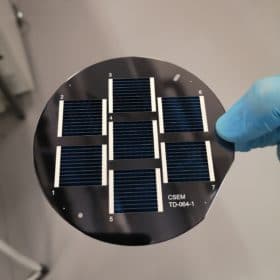
A 26.5% efficient perovskite-silicon tandem cell
Scientists in Switzerland achieved 26.5% efficiency on a perovskite-silicon tandem cell measuring 4cm² and relying on industry-standard screen-printed metallization, further demonstrating the technology’s potential for large-scale production and low-cost electricity generation.
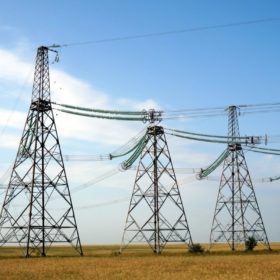
The future of power electronics is distributed, aggregated and service oriented
IHS Markit released a white paper in which the analyst outfit shared some predictions for the power electronics market. First and foremost, inverters will become smarter, and after some power outages in key markets, these devices are gearing up to take on more grid stabilizing tasks, which hitherto had been reserved for synchronous generators.
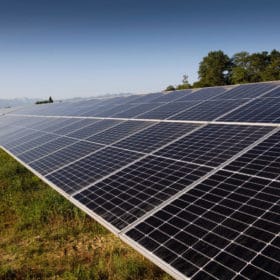
Total launches tool to estimate solar potential of unexploited land
The new tool is aimed at accelerating the deployment of photovoltaic power plants on degraded or polluted land, parking areas and quarries in France.
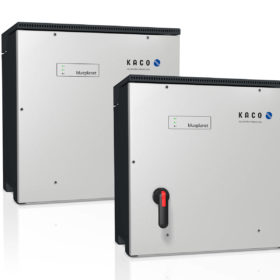
Kaco unveils string inverters with silicon carbide transistors
The blueplanet 155 TL3 and 165 TL3 inverters, designed for the large-scale segment, are claimed to offer 15% more power than their predecessor models without silicon carbide transistors.
Ramping up renewables now could save Europe €363bn by 2050
Delay, and policymakers will see the carbon emission allowance which would enable us to stay well below 2C frittered away so quickly net zero would have to be reached in 2040, rather than ten years later, when the relevant technology costs will be cheaper.

Uzbekistan shortlists 11 bidders in 200 MW PV tender
The 200 MW solar park will be built in Sherabad, in southeastern Uzbekistan’s Surkhandarya region.
