Prendre le contrôle de son processus de vente en PV résidentiel
Dans ce webinaire organisé par pv magazine France, nous explorerons avec l’entreprise Reonic les dernières évolutions réglementaires et de marché qu’a connu le secteur du solaire résidentiel et l’impact sur l’activité des installateurs. La start-up nous présentera notamment comment sa suite logicielle peut les aider à automatiser certaines tâches de prospect et de dimensionnement de systèmes photovoltaïques, intégrant aussi les batteries physiques et virtuelles, les bornes de recharge et depuis très récemment les pompes à chaleur.
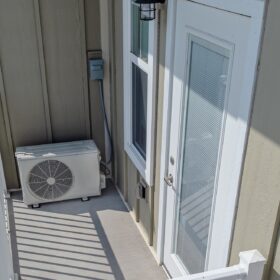
European heat pump customers face ‘fragmented’ installation journey
Apricum says in a new white paper that despite rising demand for combined energy systems with heat pumps in Europe, the installation process remains fragmented and difficult for customers.

Financial guarantee unlocks 109 MW for renewables in Moldova
Moldova’s government says developers have returned 30 grid connection permits for renewable energy projects since it introduced a financial guarantee scheme aimed at freeing up network capacity for viable investments.

Italy launches floating PV tender
The Italian authorities have opened a tender to support the deployment of about 50 MW of floating PV capacity.

Improving solar windows via microfabrication techniques
Researchers in Europe are investigating semi-transparent solar windows, applying microfabrication technniques to both CIGS and perovskite devices, to overcome the view-impeding properties of earlier solar window concepts.

Researchers identify optimal level of solar, battery storage for European energy market
Researchers in Hungary have developed a model to calculate the optimal PV and battery storage balance to support the European grid in the next few years. They found that the cost-optimal range is at 530–880 GW of PV, combined with battery storage equivalent to 2.5–7.5% of the total intermittent capacity.
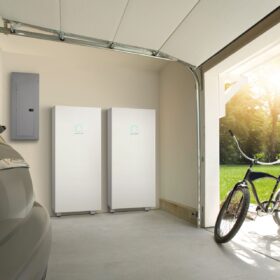
Spain pairs battery storage with 26% of new rooftop PV systems in 2024
Around one-quarter of all new rooftop PV systems installed in Spain in 2024 included battery storage, underscoring continual growth in distributed energy, despite a decline in total installed storage capacity.

SolarPower Europe maps EU solar tracker supply chain
SolarPower Europe has underscored the role of domestic mounting system manufacturers in driving PV deployment across Europe, while calling for the adoption of international customs codes, stricter quality standards, and the inclusion of fixed-tilt racking systems in national resilience technology lists under the EU Net-Zero Industry Act (NZIA).

‘In engineering, women remain markedly underrepresented’
This week Women in Solar+ Europe gives voice to Maria Ardila, construction engineer at UK-based Cubico Sustainable Investments. She says that progress remains slow in the energy industry because gender matters are often viewed as personal choices rather than the systemic issues they truly are. “Until society challenges the outdated norms and organizational structures that penalize mothers, meaningful advancement toward gender equity in leadership will continue to be constrained,” she states.
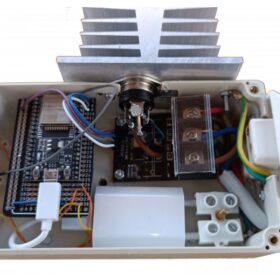
Open-source tools to build self-made management system for surplus PV power
French engineer André Buhart has published the plans and open-source software to create a DIY “solar energy router” to manage PV overproduction. Depending on the configuration, the device can direct excess photovoltaic energy to water heaters, pool motors, or underfloor heating, among others.
