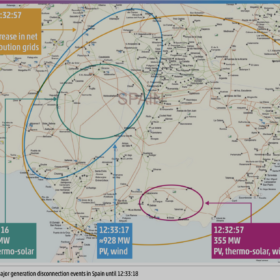
Entso-E report finds systemic failures behind 2025 Iberian blackout
The European Network of Transmission System Operators for Electricity (Entso-E) has published its final root cause report on the April 28, 2025, blackout in Spain and Portugal, finding failures across grid operations, generation, and regulations, and issuing 22 recommendations to strengthen European grid resilience.

The Hydrogen Stream: Ionautics advances catalyst toward production
Sweden’s Ionautics has advanced its platinum-based hydrogen catalyst toward full-scale industrial production, while thyssenkrupp nucera has signed contracts for 300 MW of alkaline electrolysis capacity in Spain and 260 MW in India.
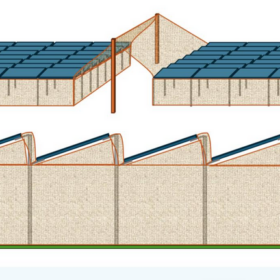
The case for ground-level agrivoltaics
German engineering firm BEC Energie Consult has developed a substructure for low-mounted agrivoltaics designed to provide cost-efficient installation while supporting crop growth and livestock management, with the potential to enhance economic viability.

‘The barriers I encountered were never dramatic, they were cumulative’
This week Women in Solar+ Europe gives voice to Delfina Muñoz, Research Director & Strategic Project Manager at France’s CEA. She says diversity is a catalyst for faster, fairer clean energy innovation. Inclusion, mentorship, and authentic leadership don’t just support people, they build stronger, more resilient teams that power the energy transition forward.
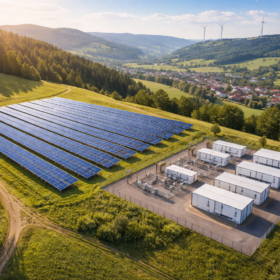
Why technical due diligence is becoming the backbone of Europe’s solar-storage boom
Europe’s hybrid solar-plus-storage projects are growing rapidly, but increasing complexity means treating technical due diligence as a formality is now a serious risk. Rigorous, lifecycle-based technical due diligence (TDD) – covering financial, supply chain, digital, and ESG factors – is essential to ensure project reliability, investor confidence, and a resilient clean-energy transition.
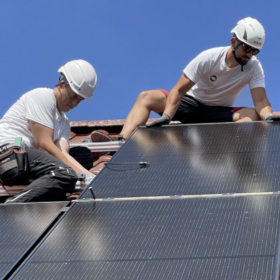
Iran conflict stirs solar demand debate in Germany
Germany’s solar sector is reporting a surge in inquiries following the military escalation between Israel, the United States, and Iran, with E.ON citing a doubling of demand for solar installations. Other industry participants are more cautious, attributing much of the increase to seasonal patterns rather than geopolitical anxiety.
Greece receives 12.2 GW of merchant battery applications for 4.7 GW program
Investors have submitted applications for 12.15 GW of utility-scale, standalone merchant battery storage projects in Greece, far exceeding the 4.7 GW the country plans to approve. But with wrestling over financing and key policy details still unresolved, the path to construction remains unclear.
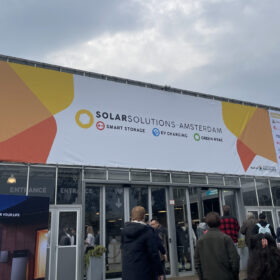
Key takeaways from Solar Solutions Amsterdam
The fourteenth edition of Solar Solutions Amsterdam showcased the latest technologies across solar, storage, electric vehicle charging and green HVAC. This year saw energy storage systems dominate the show floor, ahead of the event’s rebrand to Sustainable Solutions Amsterdam from next year onwards, reflecting the Dutch market’s position as a mature market increasingly focused on flexibility and the connectivity of different technologies within a single system.
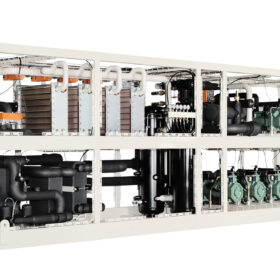
Advansor unveils scalable CO2 heat pump for large-scale heating needs
The Danish company said its configurable CO2 system delivers up to 4.8 MW per unit and is scalable to 50 MW for large industrial and commercial projects. The units offer hot water output of up to 95 C and compatibility with complex installations such as food processing, district heating, and commercial buildings.
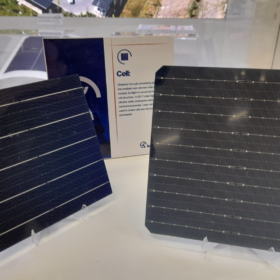
Spanish researchers develop ultra-thin solar cells for any surface
The Silicon and New Concepts for Solar Cells (SyNC) research group at the Institute of Solar Energy (IES) of the Polytechnic University of Madrid (UPM) has produced high-efficiency two-dimensional solar cell prototypes using the “hot-pick-up” technique, with simulations suggesting the cells could meet up to 30% of a building’s energy needs when applied to facades.
