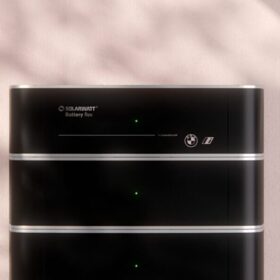
Solarwatt presents DC version of Battery flex PV storage system
Solarwatt says it has developed a DC version of its Battery flex PV storage system. The new version offers backup power and is optimized for the Steca SolBrid hybrid inverter.

The Hydrogen Stream: India launches green ammonia auction
As the state-owned SECI launches a reverse auction to purchase 539,000 metric tonnes of green ammonia a year, Yara officially opened its 24 MW renewable hydrogen plant at Herøya, Norway.

BASF, NGK launch sodium-sulfur battery with less than 1% degradation rate
A set of technological improvements incorporated into the new product NAS MODEL L24 allows for lower maintenance costs compared to the earlier sodium sulfur battery type developed by the two manufacturers.

Volkswagen enters C&I energy storage business with Elli
The Volkswagen Group has announced its entry into a new business segment with its charging and energy brand Elli. It will develop massive industrial battery energy storage systems, including initial 350 MW/700 MWh projects already in its pipeline.

ISC Konstanz claims 24.12% certified efficiency for tunnel back contact solar cell
The result was confirmed by Germany’s Institute for Solar Energy Research Hamelin (ISFH). The cell also achieved an open-circuit voltage of 709.5 mV, a short circuit density of 11,355 mA, and a fill factor of 82.04%.

DLR launches solar atlas to identify rooftop PV potential in Germany
The German Aerospace Center (DLR) has created a solar atlas to identify rooftop PV potential in Germany. This new open-access online platform uses aerial photographs and geodata processed with machine-learning methods to determine solar energy potential for the country’s entire building stock of around 20 million units.
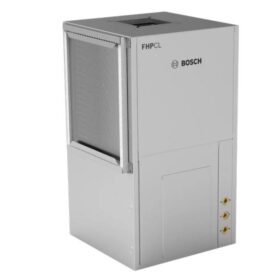
Bosch unveils water source heat pumps for residential, commercial applications
Bosch Home Comfort has presented two new heat pumps series that can be used for both retrofits and new buildings. Both products have a size of a size of ½ to 6 tons and a coefficient of performance of up to 4.9.
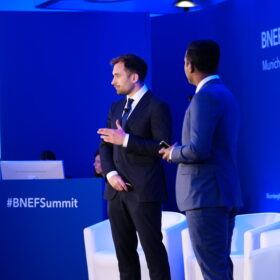
BNEF Summit highlights sluggish trading of low-carbon hydrogen, derivatives
Analysts at the recent BNEF Summit in Munich discussed delays for hydrogen adoption in European countries, noting that locations are crucial for predicting which hydrogen production plans will proceed. Projects in areas with high amounts of renewables have an advantage.
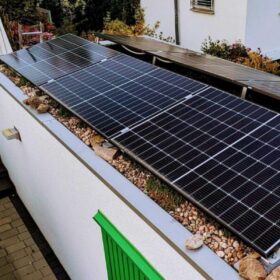
German startup offers plug-and-play 2.46 kW PV system
Wattando has developed a new rooftop PV solution that can be easily connected to a household’s power network via an AC connection. The system uses existing infrastructure and reportedly reduces installation work and time.

Circular recycling approach aims for ‘perpetual utility’ of PV materials
After analyzing the future usage of material by the crystalline silicon PV industry, including glass, aluminum, silver, copper, ethylene-vinyl-acetate (EVA), and silicon, a German research team found that a circular recycling approach could address foreseeable supply problems. It could also reportedly become economically sustainable.
