
India tenders 1.2 GW of hybrid wind-solar projects
Projects selected in the procurement exercise will sell power to the Solar Energy Corporation of India (SECI) under a 25-year PPA.
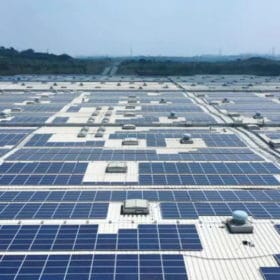
India closing in on 7 GW of rooftop solar
India had installed 6.8 GW of cumulative rooftop PV capacity by the end of 2020, with consumer-owned systems accounting for about 72% of the total, according to Bridge to India.

PCM-based passive cooling for BIPV systems
Indian scientists tested four kinds of phase change materials (PCMs) for solar module cooling in building-integrated photovoltaics. The PCMs were encapsulated with the PV system and the building envelopes and were also found to be beneficial to the thermal comfort inside the buildings.

Tata Power Solar expands cell, module capacity
Tata Power Solar, a PV manufacturer and EPC contractor, has added new lines to its factory in Bangalore, India. It is widening its product range to include half-cell and bifacial mono PERC panels.

India extends manufacturing incentive program to solar modules
A national production-linked incentive scheme introduced to encourage domestic manufacturing will now encompass solar. The PV policy will reportedly offer increased rewards for the production of more efficient panels and for Indian content–although it is not clear how.

Unsigned PPAs halting India’s renewable energy growth
Nearly 19 GW of renewable energy capacity tendered by state body the Solar Energy Corporation of India is on hold due to electric distribution companies’ unwillingness to sign the power purchase agreements. Manufacturing-linked solar projects alone account for a 63% share of the capacity in limbo.

Solar and wind together overhaul global hydro capacity
The latest set of clean energy statistics compiled by the International Renewable Energy Agency signal a changing of the guard when it comes to clean power, with legacy hydropower facilities overtaken by new intermittent renewables.

India connects community energy storage to grid
Tata Power Delhi Distribution has installed a 150 kW/528 kWh battery energy storage system at a substation in New Delhi. The system will help the utility to manage peak load and frequency regulation, while providing 150 kW of power backup for durations of four hours.

Rooftop solar, storage and EVs in India
The combination of rooftop solar and storage is a big opportunity. A new report highlights Australia – a nation with the world’s highest per capita rooftop PV capacity – as a guide for Indian policymakers.
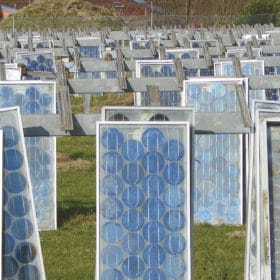
Managing solar PV waste in India
A new report compares the regulatory frameworks of the European Union and India to manage end-of-life solar panels. It also assesses and analyzes the PV waste market and processing capacities in India, while sharing recommendations for Indian stakeholders.
