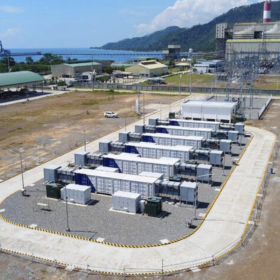
India offers $631.5 million to support 30 GWh of battery storage
The Indian government has announced viability gap funding (VGF) of INR 54 billion ($631.5 million) to support 30 GWh of battery energy storage systems (BESS), allocating capacity among 15 states and the state-owned power producer NTPC. The scheme provides INR 1.8 million/MWh and requires projects to be commissioned within 18 months through competitive bidding.
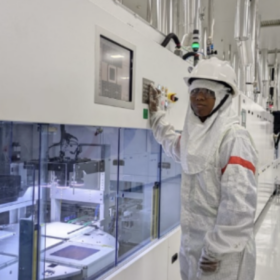
Tata Power hits 4 GW of solar module production capacity
Tata Power’s PV module subsidiary, TP Solar, has produced more than 4 GW of solar panels and 1.4 GW of cells at its factory in Tamil Nadu, India.
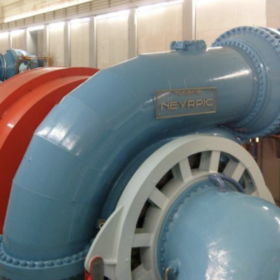
Larsen & Toubro wins 1.5 GW pumped hydro contract in India
Larsen & Toubro has won a contract from JSW Energy to carry out civil works for the 1.5 GW Bhavali pumped storage project in India, as the nation scales up long-duration renewable energy storage. The project is part of JSW Energy’s push to add 6 GW of pumped hydro capacity by 2030.
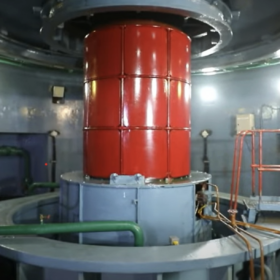
THDC commissions first 250 MW unit of 1 GW pumped hydro project
THDC India, a subsidiary of NTPC, has commissioned the first unit of 250 MW of a 1 GW variable-speed pumped storage hydropower project in India.

New soiling chamber for testing of dust buildup in solar modules
Scientists in India have designed a new soiling chamber that is capable of emulating the soiling conditions of a given geographical location in a shorter time frame, hosting larger panels compared to conventional setups. The new chamber can be used to estimate soiling losses and cleaning costs for potential solar power plant sites, to improve existing soiling models, to investigate how factors like tilt angle affect soiling, and to evaluate the effectiveness and durability of anti-soiling coatings.
Saatvik Solar starts work on 4.8 GW cell, 4 GW module plant in India
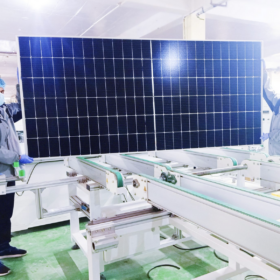
Saatvik Solar has broken ground on a 4.8 GW solar cell and 4 GW module manufacturing plant in eastern India, with module production set to begin by the end of fiscal 2026 and cell output by fiscal 2027.

Involt Energy breaks ground on 1.78 GW n-type TOPCon solar cell factory
Involt Energy has entered solar cell manufacturing with a 1.78 GW fully automated facility in western India. The company plans to begin ramp-up by mid 2026 with an additional 3 GW cell line and a 3 GW wafer manufacturing facility.
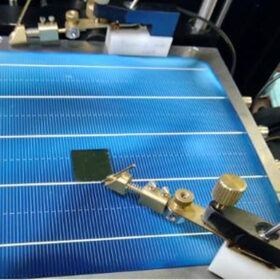
Indian scientists build 29.14%-efficient tandem solar cell with inverted top perovskite device
The researchers said they optimized the low-bandgap inverted perovskite cells through a passivating aluminum oxide (Al2O3) interlayer deposited via atomic layer deposition (ALD), which significantly helped improve device efficiency.

Deploying floating PV on mine pit lakes, tailings ponds
Researchers in South Korea have conducted a literature review on recorded cases of floating PV plants placed on mine pit lakes and tailings ponds, both of which are byproducts of the mining industry. Looking at more than dozens of cases, they have concluded that mine pit lakes generally provide more stable environments for deployment.
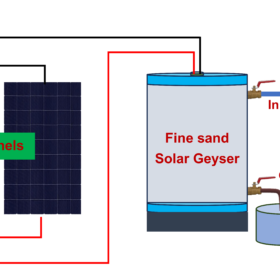
PV-powered fine sand solar geyser for domestic hot water
The system is described by its creators as a cost-effective solution for water heating by storing thermal energy in fine sand. Techno-economic analysis indicated the system is economically viable for domestic water heating applications, with an initial capital cost of $278 and an expected lifespan of 25 years.
