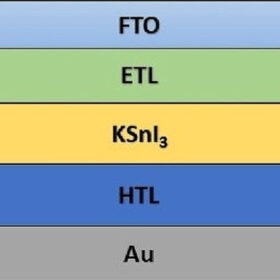
Scientists designed 10.83%-efficient solar cell based on new unleaded perovskite material
A research group in India has simulated a solar cell based on a lead-free perovskite material known KSnI3 and has found the device may achieve remarkable efficiency and stability. The cell was tested with different types of electron transport layers and hole transports layers.
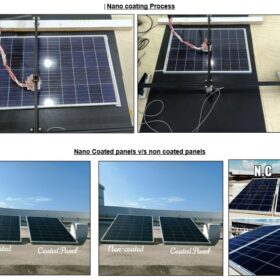
Indian startup offers nanocoating to improve solar module output
India’s TrinanoTechnologies has developed a nanocoating for solar modules that reportedly increases power generation by up to 4% due to its light-trapping, anti-reflection and self-cleaning properties.

Insolation Energy plans 600 MW solar cell factory in India
Insolation Energy, an Indian solar module manufacturer, is setting up a 600 MW PV cell production facility. It is also expanding its panel production capacity from 700 MW to 1.2 GW.
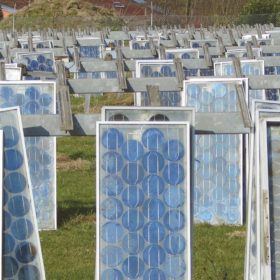
Solar passports to support PV waste management in India
A new study proposes blockchain-based solar passports to address the PV waste management challenge in India. It says such a framework would enable transparent tracking and verification of PV panels throughout their life cycle.
India’s NHPC to develop 2 GW of pumped storage, 1 GW of solar
Indian state-owned hydropower producer NHPC and Grid Corp. of Odisha (GRIDCO) have agreed to develop 2 GW of pumped storage and 1 GW of solar energy projects.

Remnants of tropical Cyclone Biparjoy impact solar generation in northern India
In a new weekly update for pv magazine, Solcast, a DNV company, presents the solar irradiance data it collected for northern India last week. Cyclone Biparjoy had a significant impact on solar power generation in the region.
Thermax unit commissions wind-solar hybrid power plant in India
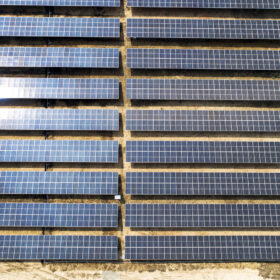
First Energy, a subsidiary of Thermax, has commissioned a 45.8 MW wind-solar hybrid plant in India for consumption by industrial consumers.
Rooftop PV system design to improve yield under partial shading
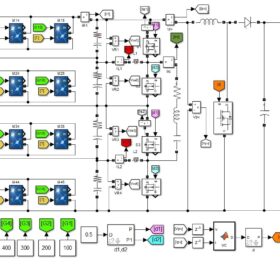
Scientists in India have proposed a new concept that improves the yield of rooftop PV systems under partial shading. This concept combines conventional total cross-tied (TCT) techniques with partial power processing converters (PPPCs), using a resonant switched capacitor converter (RSC) and a switch inductor converter (SLC).
India’s SJVN tenders 1.5 GW of renewables with storage
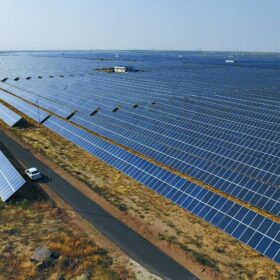
SJVN Ltd., an Indian state-run hydropower producer, has issued a tender to select developers for 1.5 GW of firm and dispatchable power from renewable power projects with energy storage systems.
Inside the impacts of soiling
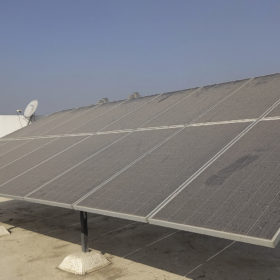
Scientists in India carried out a comprehensive study into the impacts of soiling on PV modules – measuring the amount of performance loss caused by different types of dust and bird droppings, and for modules installed at various tilt angles, in the hot-dry climate of Vellore in southern India. Their findings could allow developers to better take into account and mitigate the effects of soiling during site selection and system design.
