
Israeli storage developer moves into solar EPC with majority stake deal
Airengy Ltd., listed on the Tel Aviv Stock Exchange, has signed a memorandum of understanding to acquire a 51% stake in Green-Go, an Israeli PV developer and engineering, procurement, and construction (EPC) contractor with expertise in agrivoltaics.
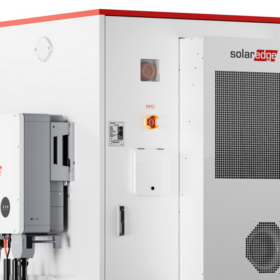
SolarEdge targets C&I with new all-in-one battery
SolarEdge has a new commercial focused battery system, with the new model scaling up to as high as 1 MW / 4 MWh depending on the inverter choice.
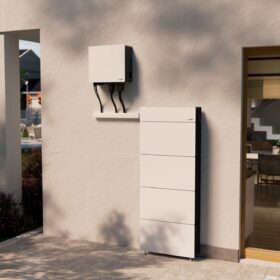
SolarEdge launches Nexis hybrid inverter and high-voltage battery for residential PV
The Nexis solution combines a flexibly configurable hybrid inverter with a modular high-voltage battery offering up to 14 kW charging capacity per stack. The inverter delivers 8–20 kW AC power, supports up to 200% DC oversizing, and features IP65-rated design with integrated backup power.
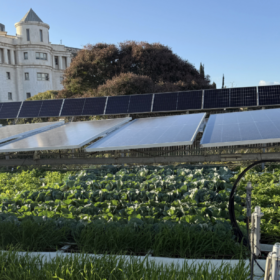
Israel approves rules for agrivoltaics
A zoning masterplan for agrivoltaics in Israel specifies solar panel coverage must not exceed 30% of the cultivated area. The lower edge of panels must be at least 1.5 m above the ground for field crops, increasing to 4.5 meters for orchards and other crops.
Flexible perovskite solar cells with tunable color, transparency
Researchers at Hebrew University of Jerusalem have demonstrated 9.2% efficient printable semi-transparent, flexible halide perovskite solar cells with tunable color and transparency.

Palestine Investment Fund provides update on solar deployment in Jerusalem
A financing program run by the Palestine Investment Fund and European Union has helped to install solar systems at Jerusalem-based companies and projects, leading to annual electricity cost savings of around €250,000.
Israel approves rooftop solar on public sports facilities
Israel’s government has approved a ILS 34 million ($10.1 million) budget and granted construction permit exemptions to support rooftop solar deployment on publicly owned sports facilities nationwide.

Israel requires PV systems on new residential, commercial buildings
Israel has introduced requirements for PV system installations on all new non-residential buildings with rooftop areas above 250 square meters and new detached residential buildings with roofs larger than 100 square meters.
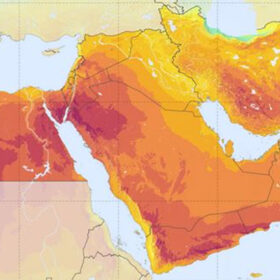
New method for PV site suitability mapping
Scientists in Malaysia have developed a novel deep-learning method for PV suitability mapping. Applying the new approach to the Middle East, they found that approximately 5.8% of the region has very high suitability and 11.5% is highly suitable for PV energy development.
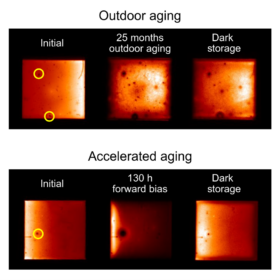
New accelerated aging test for perovskite solar cells
To assess ion migration-induced degradation modes via accelerated ageing of perovskite solar cells, an international research team investiagted using electric forward bias and dark storage approach.
