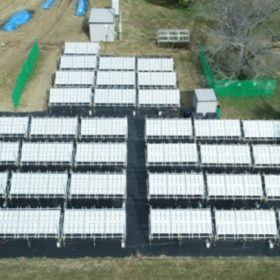
Japan launches subsidy program to cut costs of renewable heat systems
The Japanese government says it has opened applications for a subsidy initiative aimed at cutting costs for renewable heat and industrial waste heat systems. The program supports equipment upgrades that lower emissions and improve energy efficiency.
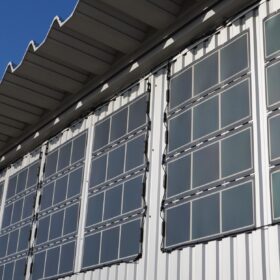
Aisin Corporation starts perovskite solar PV outdoor trial
The Japanese automotive components and systems manufacturer began testing its proprietary organic perovskite solar modules in what will be a 30 kW outdoor field trial at one of its facilities in Anjo.

Research shows how Japan’s PV market suffered from high feed-in tariffs
A team of researchers based in Japan and Sweden have found a correlation between higher feed-in tariffs and increased capital expenditures of solar projects in Japan. They suggest this may have led to a lack of incentive for developers to innovate or reduce costs, in turn inflating expenditure and hindering long-term market competitiveness.
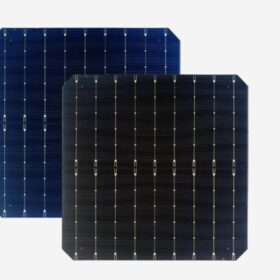
Japan’s Toyo begins production at 2 GW solar cell plant in Ethiopia
Toyo Co. has started production at its 2 GW solar cell facility in Ethiopia, with plans to deliver more than 80 MW of tunnel oxide passivated contact (TOPCon) cells by the end of April before scaling capacity to 4 GW.
Japan’s NEDO opens fiscal 2025 funding round for solar tech innovation
Japan’s national energy R&D agency has launched a five-year R&D program to accelerate solar innovation. The fiscal 2025 call for proposals seeks advances in high-efficiency cells, site-specific systems, PV module recycling, and long-term power stability.

The Hydrogen Stream: Fincantieri to build hydrogen-powered cruise ship
Fincantieri says it is building the world’s first hydrogen-powered cruise ship for delivery in late 2026, while Coca-Cola Bottlers Japan says it will debut the world’s first hydrogen-powered vending machine at the Kansai Expo this year.
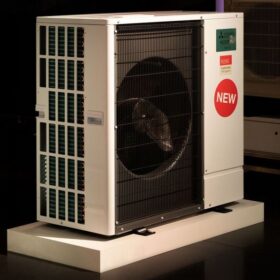
Mitsubishi Electric debuts new residential air-source heat pumps
The manufacturer has expanded its Ecodan R290 heat pump series with three new products. The systems use propane (R290) as the refrigerant and can purportedly deliver flow temperatures of up to 75 C.

Six-year test field shows agrivoltaics can be critical for rice productivity
Scientists in Japan have conducted a field experiment in rice plantations hosting agrivoltaics systems and have found that rice growth can be affected by reduced biomass and reduced panicle number. However, their analysis has also shown that gross return in lowland rice agrivoltaics can be 14 times higher than rice growth without PV.
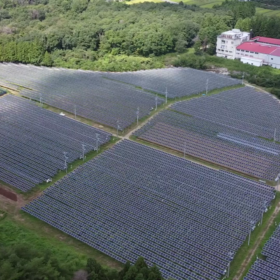
Japan’s energy R&D agency unveils solar strategy
Japan’s New Energy and Industrial Technology Development Organization (NEDO) has published a solar strategy to scale up deployment and drive next-generation technology, aiming for carbon neutrality by 2050.
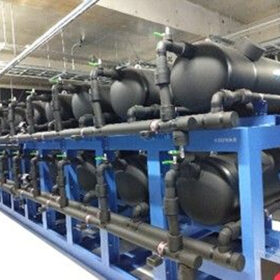
Japanese energy supplier to use green hydrogen for district heating, power
Akasaka Heating & Cooling Supply says it will use green hydrogen produced at an unspecified location in Japan to produce heat and electricity for its Akasaka 5-chome district heating system in central Tokyo.
