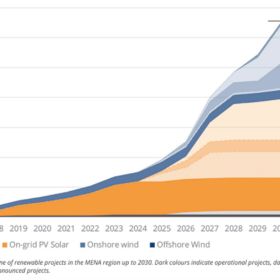
MENA region on track for 75 GW of solar by 2030
Dii Desert Energy, an energy transition think tank, has reported the Middle East and North Africa (MENA) region will have a cumulative solar capacity of 75 GW at the end of the decade if the current project pipeline is fully realized. It adds an additional 40 GW of solar projects need to be planned and executed in the next five years to match the region’s pledged 2030 targets.
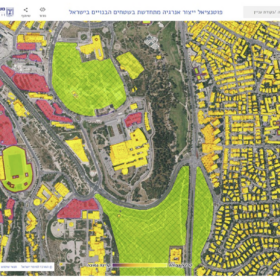
Israel introduces tool to calculate rooftop solar potential
Israel’s Ministry of Energy and Infrastructure, in collaboration with the Israel Mapping Center, has launched a tool that calculates the potential and expected income from rooftop solar installations on residential, industrial, and public buildings.
Jordan opens tender for solar at water facilities
Jordan’s Water Authority has kicked off a tender for solar plants at water facilities to improve energy efficiency in the sector. Contractors must request pre-qualification questionnaires by email by Feb. 20, 2025.

Turkey allocates 800 MW in PV tender with final price of $0.0325/kWh
Turkey has awarded 800 MW of solar capacity in its latest PV tender, with the final price set at $0.0325/kWh. The authorities selected six projects ranging from 40 MW to 385 MW.

The Hydrogen Stream: Acwa Power, Sefe to supply green H2 to Europe
Acwa Power has partnered with Sefe to set up a hydrogen bridge between Saudi Arabia and Germany, while the Danish government has committed up to $1.1 billion to develop a new hydrogen pipeline.
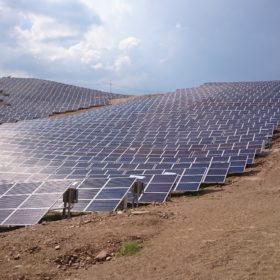
Turkey’s cumulative solar capacity doubles in 2.5 years to 19.6 GW
Ember, a London-based energy think tank, says in a new report that Turkey’s cumulative installed PV capacity has doubled to 19.6 GW in just two and a half years, driven by a surge in self-consumption projects.
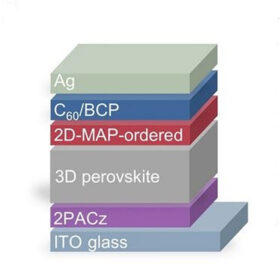
Perovskite solar cell based on 3D/2D heterostructures achieves 26.05% efficiency
Developed by an international team including Saudi Arabia’s KAUST and the Chinese Academy of Science, the solar cell is claimed to be one of the most efficient perovskite PV devices based on 3D/2D heterostructures built to date.
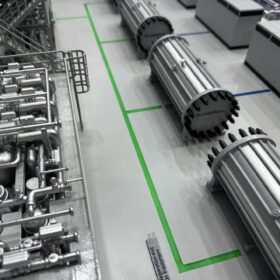
The Hydrogen Stream: Luxcara advances 20 MW hydrogen project in Norway
Luxcara says preparatory work for its Bodø electrolysis plant is underway in Norway, with commercial operations set to begin in 2026, while ACWA Power and Snam have signed an agreement to deliver hydrogen from Saudi Arabia to Europe.
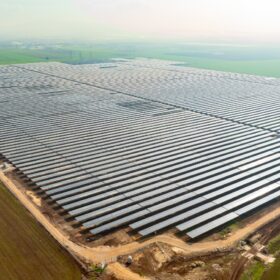
Teralight switches on Israel’s largest solar plant
Teralight has activated Israel’s biggest PV project, the 150 MW Ta’anach 1 array, which will produce 310 GWh of energy per year. The facility will be expanded next year with the 104 MW Ta’anach 2 installation, featuring 440 MWh of energy storage.

Why and where solar PV succeeded in Arab Gulf states
A US-UAE research team has investigated how regulatory regimes impacted solar power deployment across six Arab states of the Persian Gulf. Their findings show that the predominant role of the state is expected to continue.
