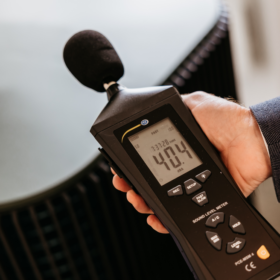
Dutch utility testing ‘silent’ residential heat pumps
Dutch utility Eneco is testing low-noise air-to-water heat pumps from startup Whspr in around 20 homes, aiming to ease installation constraints near property boundaries. The systems reportedly achieve coefficients of performance of up to 5 and show up to 80% noise reduction in laboratory testing.
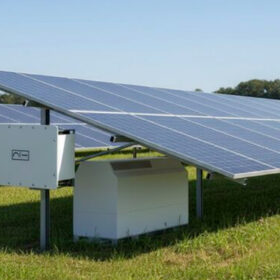
Moonwatt brings DC-coupled, passively cooled sodium-ion tech to solar projects
The Dutch start-up, founded by former Tesla leaders, is taking a novel approach to sodium-ion battery technology, optimizing it for integration with solar power plants. Its technology is set to be deployed for the first time in a Dutch solar-plus-storage project later this year.
Nissan wheels out solar-powered vehicle
The Ariya demonstration vehicle features 3.8 m² of Lightyear’s custom solar panels integrated across the hood, roof, and tailgate. Testing showed that the car could generate 0.5 kWh of solar energy during a 2‑hour, 80 kilometer trip, delivering up to 3 kilometers of range at no extra cost or charging time.

Netherlands’ 2025 solar additions estimated at 2.08 GW
Provisional estimates from Dutch New Energy Research indicate the Netherlands added 0.54 GW of residential solar and 1.54 GW of C&I and large-scale solar last year, taking the country’s cumulative capacity to just shy of 30 GW.
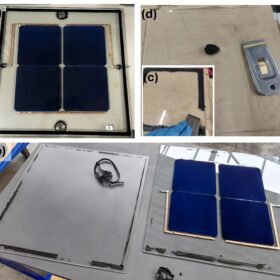
TU Delft unveils liquid solar module encapsulation tech
TU Delft researchers have developed a liquid-based solar module encapsulation that performs on par with conventional EVA panels while offering improved recyclability and circularity. The approach is compatible with silicon and tandem perovskite/silicon cells and could support thermal management and integration into photovoltaic-thermal modules.

Dutch long-duration energy storage project targets sub-€50/kWh costs with innovative technologies
The SLDBatt project brings together TRL 7 battery technologies – including molten sodium‑salt, saltwater acid–base flow, and hydrogen–iron flow batteries – to deliver an innovative and cost-effective long-duration energy storage solution.
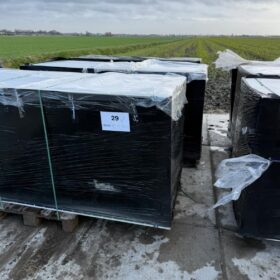
Solar glare forces panel removal at Amsterdam Airport
Glare from a nearby solar park forced temporary runway closures at Amsterdam Airport Schiphol, prompting Dutch authorities to order the removal of about 78,000 PV modules and apply anti-reflective film to others. The solar park operator, however, decided to replace all the panels. The largest portion of the removed, near-new modules have since been acquired by BM Energy and are expected to be redeployed in projects where glare is not a concern.
The Hydrogen Stream: CMB.Tech secures China green ammonia offtake
CMB.Tech has secured an offtake agreement for renewable ammonia from CEEC Hydrogen Energy’s 800 MW wind-and-solar-powered project in China, while Germany’s Gascade Gastransport said it has converted about 400 km of gas pipelines to form a new hydrogen transport corridor.

Dutch regulator finds grid fees for rooftop solar are reasonable
The Dutch competition regulator rules feed-in costs for home solar are not unreasonable. It is calling on energy suppliers to charge feed-in costs uniformly to make it easier for consumers to compare contracts.
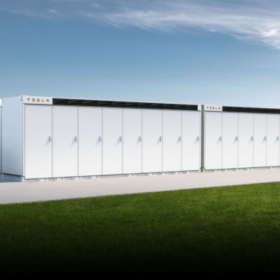
SPIE signs Tesla framework deal for European battery storage projects
France-based SPIE has signed a three-year framework agreement with Tesla to deploy Megapack technology across European battery energy storage projects, including a 1.4 GWh facility in the Netherlands.
