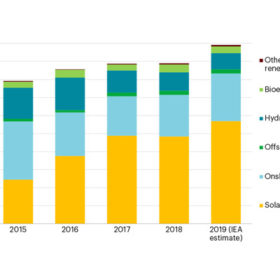
International Energy Agency forecasts 115 GW of new solar this year
The global expansion of PV, wind power and other clean energies will see double-digit growth this year as solar continues to lead the pack.

Canada’s Saskatchewan province to halt net metering for solar
Utility SaskPower is set to close the net metering open to systems up to 100 kW in size once a 16 MW cumulative generation capacity limit is reached in the province.
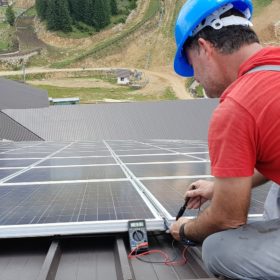
Live fast, die young: MIT study proposes use of 10-year panels
Research has found even short-lived, 10 to 15-year solar panels could provide enough return for bankable projects. The researchers believe panel costs, coupled with an industry mindset now fixed on the final solar energy price rather than costs per kilowatt installed, may open opportunities for PV products currently snubbed because of a short lifecycle.

The weekend read: The specter of PV protectionism
Trade tariffs are spreading across the global PV industry. The United States has been especially active with its sandwich of old antidumping and countervailing duties coupled with new Section 201, 232 and 301 duties. Some of these are part of the Sino-U.S. trade dispute; others impact not only Chinese producers, but manufacturers around the world. So, what will be the impact of this new era of PV protectionism on the solar sector?

Google buys power from another 1.6 GW of renewables
The new deals worth $2 billion in new investments were made by the Internet giant in in the U.S., Chile and Europe.
Open PV Project goes offline
The US Department of Energy has shut down the site for its Open PV Project, which supplied cost and installation data. Is this the winding down of a project whose time had come, or is the administration of President Donald Trump closing off another data source on renewable energy?

Amazon pledges zero emissions by 2040
Amazon unveiled a number of new climate initiatives this week, including 80% renewables by 2024, zero emissions by 2040, a fleet of 100,000 electric vans and a $100 million investment in reforestation measures.
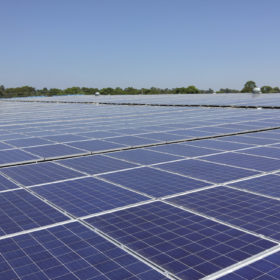
Fitch predicts a decade of corporate renewable power procurement growth in the US
Growth in U.S. solar and wind generation capacity will average 7.9% and 3.9%, respectively, between 2022 and 2028 according to Fitch Solutions, who projects almost 120 GW of solar power to be deployed in that period. Corporate clean energy buyers are to be a large part of the trend, and to accelerate deployments during the period.

The blackest black for more efficient solar cells
MIT scientists claim to have created a material 10 times more black than anything witnessed to date. It is said to be able to absorb more than 99.96% of incoming light and reflect 10 times less light than other superblack materials. The invention may be interesting for the development of black silicon PV technology and carbon nanotube-based solar cells.
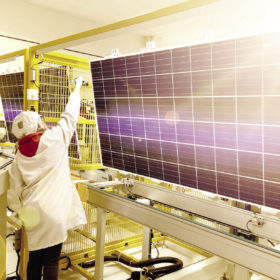
Canadian Solar raises efficiency record for mono cast cell
The result was verified by Germany’s Institute für Solarenergieforschung GmbH. The Canadian-Chinese manufacturer claims to have achieved 22.8% efficiency for its multi-crystalline P5 cell, produced with a mono cast manufacturing process.
