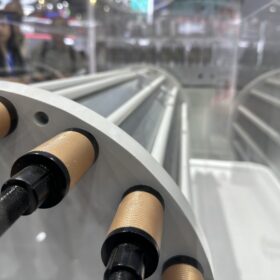
The Hydrogen Stream: Air Products cancels three US projects
Air Products is pulling out of three US projects due to unfavorable economics and regulatory changes. The company says it remains focused on its Neom green project in Saudi Arabia and the Louisiana Clean Energy Complex

Canadian startup unveils substring inverter prototypes
Daanaa says its news Zodiac substring inverter delivers up to 42% more energy than a regular setup.

Strawberry fields forever, and with transparent PV
Scientists have grown strawberries under thin-film cadmium telluride panels with varying transparency. They found that 40% transparency maintained a greater than 80% yield of uncovered plants. If all strawberry farms in the world were converted to agrivoltaics, they would produce up to 173 TWh a year.
EnergySage ranks top solar panel brands in US market
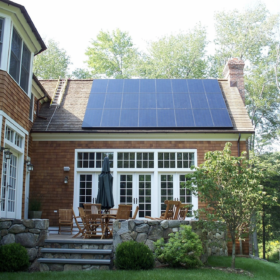
EnergySage, a residential PV marketplace operator, has released a review of the top solar panel brands in the US market.
Weil-McLain launches dual-fuel heat pumps for residential, light commercial applications
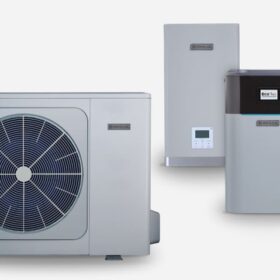
The US-based heating specialist said its new air-to-water heat pumps use difluoromethane as the refrigerant and have a coefficient of performance of up to 5.37.
California bill introduced to mandate a VPP implementation plan
Virtual power plants, which could save state ratepayers an estimated $550 million per year, are connected aggregations of distributed energy resources like rooftop solar and energy storage.
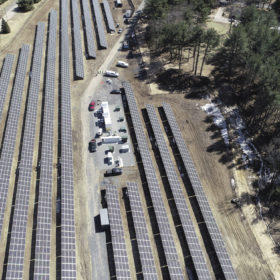
California off to a strong clean electricity start with solar up 33.8%
Forty-eight days into 2025, CAISO gas use for electricity is down almost 28%, while battery use is up 78%, and solar has already met 100% of demand in the midst of winter.

US added nearly 50 GW of new solar generating capacity in 2024
A new report by the Business Council for Sustainable Energy and BloombergNEF unpacks the market and policy trends facing the U.S. solar industry.

Lennox debuts residential heat pump for cold climates
The company says that its new SL22KLV heat pump system can supply heat in temperatures as low as -28.9 C. It uses R-454B as the refrigerant and has a size ranging from 2 tons to 5 tons.
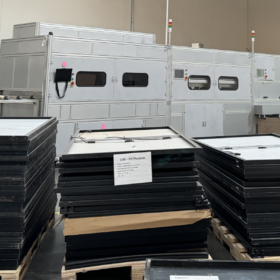
U.S. startup unveils highly automated, low-waste solar panel recycling tech
PV Circonomy, based in California, has launched a recycling and treatment service for end-of-life (EoL) silicon PV panels based on a highly-automated, proprietary technology that reportedly has a 99.3% recovery rate. The solution includes the recovery of EVA and glass material for use in other industries.
