
Key takeaways from Solaire Expo Maroc
A pavilion dedicated to electric vehicles, a dominant Chinese presence and limited European representation shaped the solar trade show held Feb. 10 to 12 in Casablanca, Morocco. Local distributors warned of rising prices for Chinese solar equipment, while a booming commercial and industrial (C&I) segment, a nascent residential market, emerging storage demand and largely untapped solar potential underscored the sector’s direction.
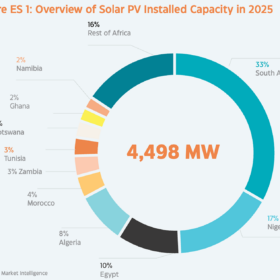
Africa installed 4.5 GW of solar in 2025, says Global Solar Council
The Global Solar Council’s Africa market outlook report says the continent saw its fastest year for solar growth to date in 2025. Its medium-term outlook forecasts Africa to install over 31.5 GW of solar by 2029, with distributed and utility-scale markets set to continue their expansion across an increasing number of countries.
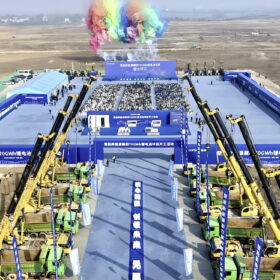
Cornex secures 11.5 GWh of battery orders from Saudi Arabia, Egypt
The Chinese manufacturer will supply 5.5 GWh of energy storage products to Saudi Arabia and another 6 GWh to Egypt, as it works to expand its global footprint.
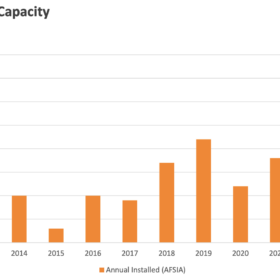
Africa’s installed PV capacity estimated above 63 GW
The Africa Solar Industry Association (AFSIA) has now identified 23.4 GW of operational solar projects across the continent but when taking into account Chinese PV export data, estimates total installed capacity in Africa could reach over 63 GW.

Key takeaways from Abu Dhabi’s World Future Energy Summit
WFES 2026 in Abu Dhabi underscored growing momentum for solar, storage, and C&I renewables across MENA, with batteries emerging as a key enabler for grid stability, agriculture, and data centers. Industry leaders pointed to Iraq, Libya, Yemen, and Saudi Arabia as key growth markets, highlighting rising interest in AI-driven data centers, solar-plus-storage solutions, and a broadening regional supply chain.

GCL, Cornex, TBEA to build solar manufacturing complex in Egypt
Egypt’s Kemet has signed three agreements with Chinese companies over the last week, covering plans for a 5 GW solar cell complex, a 5 GWh battery energy storage factory and Egypt’s first solar inverter factory.

The Hydrogen Stream: Scatec-led 100-MW green project in Egypt to step operations in the coming months
The consortium expects to reach Final Investment Decision (FID) on the full-scale project in the Ain Sokhna Industrial Zone in the coming months, while Brazil’s Federal Court provisionally ordered the suspension of construction activities of Solatio’s project in the State of Piauí.
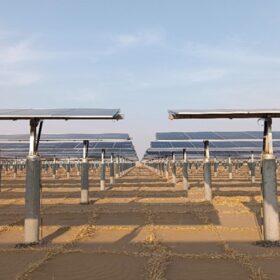
MENA region installs 12.2 GW of solar in 2025
Latest report from energy think tank Dii Desert Energy says that with the Middle East and North Africa’s project pipeline of renewables now standing at 202 GW, solar is likely to drive the region past its aggregated national ambitions for renewables of 235 GW by 2030.
Scatec secures PPA for Africa’s largest solar-plus-storage project
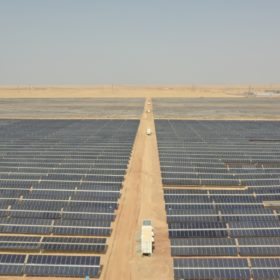
Scatec has inked a 25-year power purchase agreement in Egypt for a 1.95 GW solar, 3.9 GWh battery energy storage project, representing the developer’s largest investment to date.
The Hydrogen Stream: RWE commissions 100 MW hydrogen electrolyzer
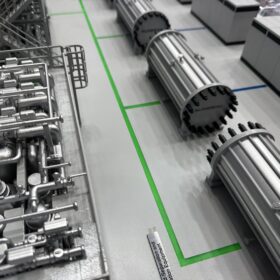
RWE has started commissioning a 100 MW electrolyzer in Germany to supply renewable hydrogen under long-term contracts, while Hydrogen Utopia International and Hydrogen Systems are advancing plans to build waste-to-hydrogen plants in Saudi Arabia.
