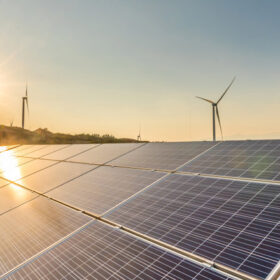
Hydro Rein and Norwegian Church Endowment establish joint solar power company
New Geisli Energi AS is backed by Norsk Hydro’s renewable energy unit Hydro Rein and the state-owned OVF (Norwegian Church Endowment) and will develop up to seven solar energy projects totaling 655 MW in Norway in the first phase.
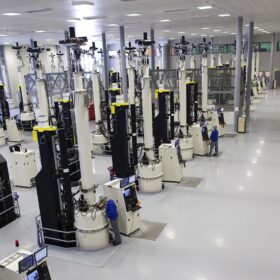
NorSun secures $8.5 million in recent funding round
Norway’s NorSun, a monocrystalline silicon wafer supplier and ingot manufacturer, has raised NOK 90 million ($8.5 million) to support its projects.
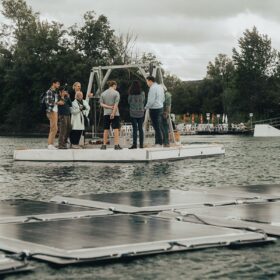
Floating PV for waterparks
Prefabricated floating solar PV provider Sunlit Sea, based in Norway, has provided its floaters for a 60 kW floating array installed at a waterpark in Germany.
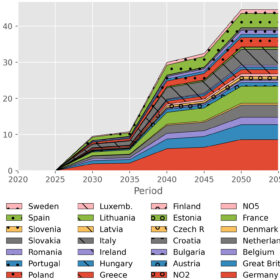
The Hydrogen Stream: Early adoption of green hydrogen leads to higher costs
Norwegian researchers say blue and green hydrogen could complement each other in the future, but early adoption of green hydrogen could result in increased hydrogen production and emissions.
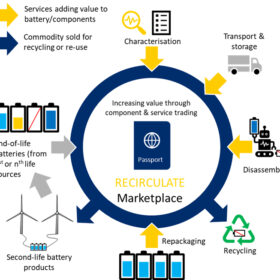
Recirculate – giving EV batteries a second-life
With the rapid growth in electric vehicle (EV) demand bringing fears of a mountain of EV battery waste piling up further down the line, the EU-Swiss government-funded Recirculate program is planning how to keep batteries in use for much longer before they head to recyclers.
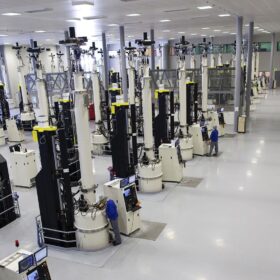
European solar manufacturers secure EU financial support
Norsun and Midsummer have both secured financing to support their capacity expansion plans. Norway’s Norsun plans to raise its polysilicon capacity to 3 GW and Midsummer wants to build a 200 MW module facility in Sweden.
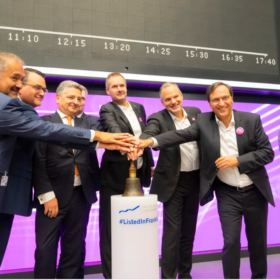
The Hydrogen Stream: Thyssenkrupp lists hydrogen business in Frankfurt
German engineering conglomerate thyssenkrupp has listed shares of its hydrogen business, thyssenkrupp nucera, on the Frankfurt Stock Exchange (Prime Standard).
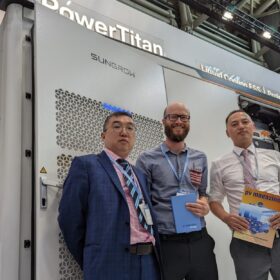
Sungrow’s James Li discusses liquid cooling for ESS
James Li, director of PV and energy storage systems (ESS) for Sungrow Power Europe, recently spoke with pv magazine about the company’s latest offerings. He noted that the PowerTitan 2.0 ESS, which was unveiled at Intersolar, uses all-liquid cooling technology.
The Hydrogen Stream: Northern Europe can produce green hydrogen
Finnish researchers have said in a new report that northern European countries could produce cheap hydrogen domestically, while TotalEnergies, Schneider Electric and other companies signed new hydrogen project deals.
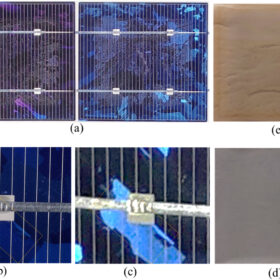
Keep your solar cells dry
Scientists in Norway used various imaging and characterization techniques to analyze the cells and other components of silicon PV modules that had been installed in the field for more than 10 years. The group’s aim was to isolate the role of moisture in various mechanisms that cause performance loss over time, and to understand how these mechanisms progress over long-term installation in real outdoor conditions.
