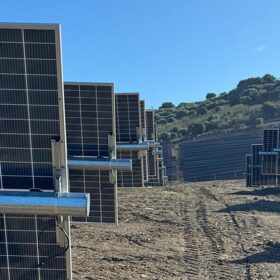
PV Hardware offers new terrain-following tracker solution
The Spain-based manufacturer announced terrain-conforming tracker support, enabling up to 2° of variation between posts. The new solution is meant to enable solar PV on more difficult sites without increasing environmental impact or construction costs.

The Hydrogen Stream: Lhyfe raises €2.5 million in first crowdfunding round
Lhyfe has raised €2.5 million ($2.9 million) from 1,200 investors for four hydrogen sites in France and Germany, while the UK government has opened a consultation on injecting up to 2% hydrogen into the gas grid.

Spanish parliament rejects grid reform law proposed after April blackout
Spain’s parliament has rejected a legislative package aimed at reinforcing the grid and scaling up battery energy storage following the April 28 blackout.

Ionly launches 5 kWh residential battery
Ionly introduces the XYZ 5 kWh residential battery, featuring 90% European-sourced components and advanced reparability, from its base in Valencia, Spain.

Spain launches call for access to 3.68 GW of grid capacity
The Spanish government has kicked off its first grid-access tender for 3,681 MW at eight transmission nodes across six regions, targeting areas with large-scale industrial demand.
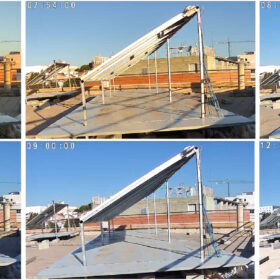
Precise backside irradiance modeling for bifacial PV is often unnecessary
A European research group has developed a new “empirical” method for measuring the backside irradiance of bifacial PV system. The proposed approach was tested across several European locations and it was found to enable annual performance calculations with a fixed backside irradiance share value.
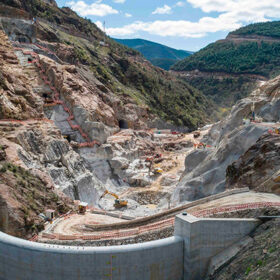
Iberdrola plans 1.32 GW pumped-hydro storage project in Portugal
Iberdrola has started approval processes for a 1.32 GW pumped-hydro storage project in Portugal. The Proyecto de Aprovechamiento Hidroeléctrico de Minhéu is set to become the country’s largest facility of its kind once completed.
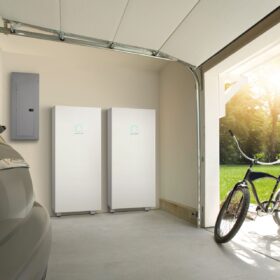
Spain pairs battery storage with 26% of new rooftop PV systems in 2024
Around one-quarter of all new rooftop PV systems installed in Spain in 2024 included battery storage, underscoring continual growth in distributed energy, despite a decline in total installed storage capacity.
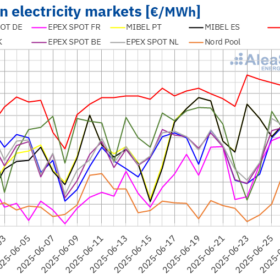
Italy, Portugal, Spain break daily solar production records
AleaSoft Energy Forecasting’s latest analysis finds weekly average electricity prices dropped across most major European markets last week, driven by lower gas and CO2 emissions prices and in some cases, an increase in solar energy production.

Combining PV-driven heat pumps with district heating in multi-apartment buildings
An international research group has investigated how PV-powered heat pumps and district heating could be combined to heat a multi-apartment building in Sweden and have found that, of the three combinations they evaluated, relying on heat pumps as the primary heat source was the “most beneficial solution” in terms of operating costs and environmental impact.
