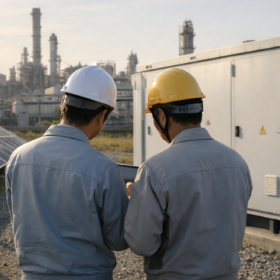
Osaki Electric signs EMS development pact with Kyocera, Taiwan Plastics
Osaki Electric says it has signed an agreement to formalize joint development of its AI-based energy management system (EMS), integrating solar generation and lithium iron phosphate (LFP) battery storage. It aims to sign a final contract by December 2026.

Taiwan’s solar feed-in tariffs remain unchanged
The Taiwanese authorities have also introduced a repowering mechanism designed to encourage replacement of aging PV equipment.
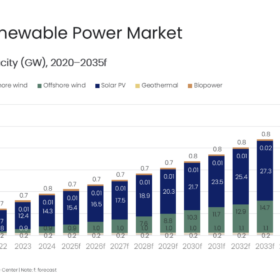
Taiwan on track to deploy 31.2 GW of solar by 2035
UK-based GlobalData says Taiwan is on course to more than double its current solar capacity by the end of 2035.
The Hydrogen Stream: Europe forecasts €240 billion for hydrogen grids to 2040
The European Commission says its new grids package includes €240 billion ($281.8 billion) for hydrogen networks to 2040, alongside fresh Italian State aid for clean tech deployment.
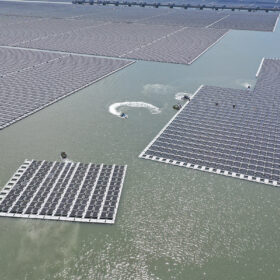
Taiwan tightens rules for ground-mounted, floating solar
Revisions to Taiwan’s Environmental Impact Assessment Act, Tourism Development Act and Geology Act introduce requirements for environmental impact assessments prior to development of solar projects, and rules out solar installations larger than one hectare in scenic spots and geographically-sensitive areas.

Short circuit in cable causes fire at Taiwanese floating PV plant
Project contractor United Renewable Energy Engineering says 10 MW of the 192 MW site was preventatively shut down during the incident, which around 30 meters of cable line being damaged. The fire was brought under control within an hour, with the company anticipating no lasting damage to the surrounding area.
Saft to supply 356 MWh battery storage project in Taiwan
French energy storage specialist Saft says it will provide 356 MWh of containerized batteries to a project in Taiwan, raising its total capacity on the island to 630 MWh by 2026.
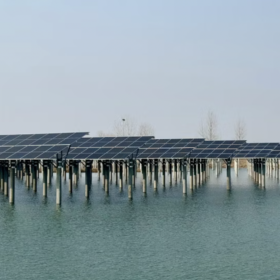
Taiwan to revise environmental impact rules amid floating solar scrutiny
The Taiwanese government has revealed plans to update environmental impact assessment (EIA) standards for solar projects, following storm-related damage to installations and growing public concern over floating PV deployment.
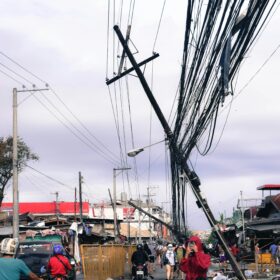
Typhoon Danas damaged 135,000 solar panels in Taiwan
Taiwan’s Ministry of Environment found no abnormalities in water quality at the site of damaged solar panels following last month’s Typhoon Danas, after conducting water quality tests at impacted solar power plants.
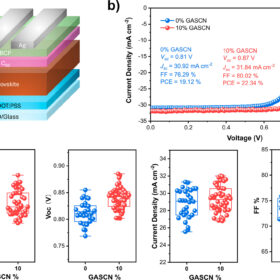
Researchers use guanidinium thiocyanate to raise perovskite cell efficiency
Researchers have used guanidinium thiocyanate as a chaotropic agent to modulate the crystal growth rate during perovskite crystallization. They compared different concentrations of the guanidinium thiocyanate. Champion device efficiency was 22.34%.
