
Another battery recycling plant for Sweden
Construction on the Halmstad facility is expected to start this year after the Stena Recycling branch of the Swedish conglomerate announced a €25 million commitment.

Draghi must deliver on promises to simplify Italian solar permits
The current planning regulations would mean Italy not hitting its 2030 climate change targets for another 70 years and clean energy trade bodies say the Simplification Decree being debated in parliament – which was drafted to secure €191 billion of EU cash and loans – does not go far enough.

New approach promises reduced impacts in lithium mining
Research institutes in Germany and Chile are investigating the potential of extracting lithium and other minerals, as well as drinking water, from brines used in geothermal energy. The concept could greatly reduce the environmental impacts of mining in northern Chile. The project has set up a demonstration of the technology at a geothermal power plant in western Germany, and is working to identify optimal sites in Chile for further development.

Transparent solar panels for agrivoltaics
Romande Energie and Swiss research institute Agroscope are testing startup Insolight’s transparent PV panels in an agrivoltaic project. The modules are replacing the plastic covers used to grow strawberries and raspberries.
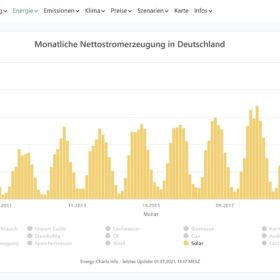
PV was the largest electricity source in Germany in June
The photovoltaic systems installed in Germany produced almost eight terawatt-hours of solar power in June alone. The previous record had been set in June 2019. Solar covered around 20.6 percent of the country’s electricity demand last month.
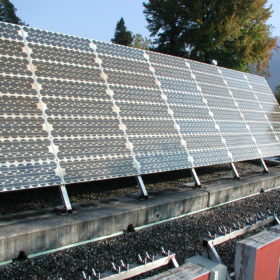
Exploring the depths of Europe’s oldest grid-connected PV system
A 10 kW PV system has been feeding electricity into the Swiss power network since 1982. A research team has investigated the performance of the array’s first 35 years of life and has found that solar modules can target – at least in temperate climates – service lifetimes of 35 years, and that the bill of materials matters, a lot!
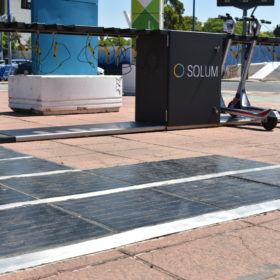
Electric scooter recharging station powered by solar pavement
Developed by Solum Photovoltaic Innovation, the recharging station is being powered by a 7.6 square meter, walkable photovoltaic pavement coupled to a 2-4 kWh storage system. This configuration is enough to repower 12 scooters per day.
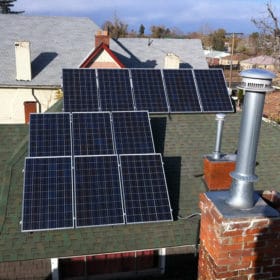
‘Residential batteries are less profitable than selling excess power to the grid’
Although self-consumption of solar power is the optimal economic approach, the expense of household batteries at present outweighs the increased ability they offer to use electricity generated on the roof. Whether aggregated ‘virtual batteries’ offer better returns is an open question, due to lack of electricity company transparency.
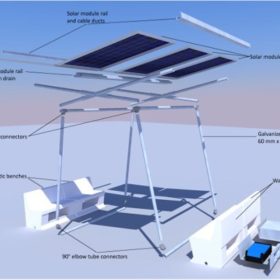
A solar pavilion for India’s rooftops
India’s energy transition will not succeed without rooftop PV and roll-out is hindered not only by a lack of household finance, but by the fact many of the nation’s flat roofs are enjoyed by residents. Germany’s international development agency has proposed a solution.
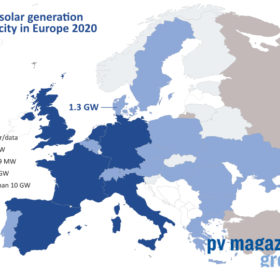
‘Denmark could be an 80 TWh clean power market by 2030’
Green hydrogen demand and electrification could drive a solar boom in the nation, according to the chief executive of a developer sitting on 4 GWp of photovoltaic projects.
