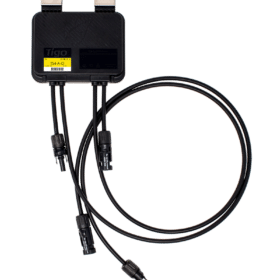
Huge opportunity for module-level power electronics
A new report form analysts at IHS Markit notes that the market for module-level power electronics (MLPE) grew by 33% between 2019 and 2021, with around one-third of new residential solar installations now taking advantage of MLPE’s promise of improved safety, energy yield and fault detection. And with smaller, distributed generation systems expected to represent 43% of global PV installations between now and 2025, the opportunity for MLPE will only get larger.
Gallium doping keeps p-type in the frame
Scientists at Germany’s Fraunhofer Institute for Solar Energy Systems (ISE) have investigated gallium-doping in p-type silicon wafers as a route to better performance. Testing these specially produced p-type wafers in TOPCon and heterojunction cell architectures, which several major PV cell manufacturers are gearing up to produce on more expensive n-type wafers, the scientists found that with gallium doping, the p-type wafers can achieve similar or even better cell efficiencies compared to those made so far with n-type wafers.
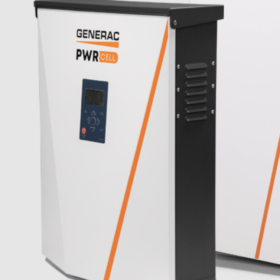
Generac AC coupling for PWRcell solar-plus-battery storage systems
With a new firmware update, Generac PWRcell battery storage products can accept up to 7.6 kW of AC power generated by third-party PV inverters.

Supply chain difficulties translate into losses for SMA
SMA’s Home Solutions segment was particularly badly hit as the PV inverter manufacturer struggled to meet the demand due to the shortage of materials. The sales and results in the first half of 2022 were therefore significantly worse than in 2021. The company now wants to take “a series of measures to improve its long-term ability to deliver.”
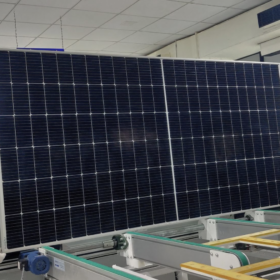
Sunora Solar unveils mono PERC module with 21.03% efficiency
Sunora Solar’s new 144-cell solar module is available with power outputs ranging from 520 W to 550 W and a power conversion efficiency of 20.18% to 21.03%.

Growing consensus on 100% renewables
An international group of researchers from 15 universities has said that there is growing consensus among scientists that an energy system based on 100% renewables could be achieved cost effectively by 2050.
Quanex releases new solar panel sealant
Texas-based Quanex’s new sealant helps to delay power losses over a PV module’s lifetime and extends useful lifetimes by locking out moisture.
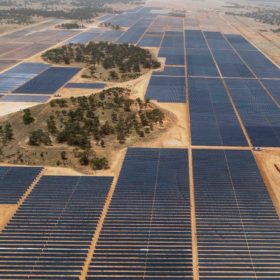
Why is green energy infrastructure booming despite global economic woes?
The Covid-19 pandemic and resulting economic fallout have had a variety of impacts on the clean energy transition, with some sectors being more affected than others. Earlier this year, the International Energy Agency (IEA) warned of slowed progress towards sustainable energy goals due to Covid-19 and reversed progress in many areas crucial in reaching net zero, such as energy efficiency, clean cooking, or access to electricity. There is one sector, however, that has shown remarkable resilience since the beginning of the pandemic and has been able to maintain, and even accelerate, its rapid growth since 2020: green energy infrastructure.

Backward ray tracing for fast energy yield simulations
Scientists in the Netherlands have developed a model to forecast the energy yield of a PV system. It is able to take into account factors such as partial shading and multiple module orientations. Tested against a reference cell and pyranometer, the model showed less than 5% error, and the scientists claim their approach is up to three orders of magnitude faster than more common approaches using complex ray tracing.
Secrets of sustainable distributed-generation strategies
Tom Hunt, the CEO of Pivot Energy, says that renewable energy capacity at the distribution level can meet needs without the long lead times required for larger, utility-scale resources.
